

A well-designed lead funnel transforms how creator agencies convert talent inquiries into revenue-generating models. For OFM agency operators managing 15, 30, or 50+ creators, a systematic approach to intake, qualification, and onboarding determines whether you're drowning in spreadsheets or running a scalable operation. The difference between agencies that plateau at a dozen models and those that scale profitably lies in how deliberately they structure their lead funnel from first contact to first payout.
Understanding the Lead Funnel in Creator Agency Operations
The lead funnel represents every stage a potential creator passes through before becoming an active, revenue-generating model on your roster. Unlike traditional sales funnels that end at a purchase, your funnel extends through contract signing, compliance verification, platform setup, and initial content planning.
Most agencies lose 40-60% of interested creators between initial inquiry and signed contract. The primary failure point isn't lack of interest-it's operational friction. When your intake process requires back-and-forth emails, manual document collection, and weeks of waiting, qualified talent moves to competitors or attempts solo careers.
Mapping Your Current Intake Process
Start by documenting every touchpoint from inquiry to active creator status:
- Initial contact form or social media DM
- Qualification call or application review
- Information packet send
- Follow-up sequence
- Contract negotiation
- Compliance document collection
- Payment setup
- Platform account connection
- Content strategy session
- First revenue milestone

Each stage introduces potential drop-off. The agencies that build a high-performing lead funnel measure conversion rates at every transition point. If 100 creators inquire monthly but only 12 sign contracts, identify which stage bleeds the most prospects.
Building a Qualification Framework That Scales
Not every inquiry deserves equal attention. Agencies that treat all leads identically waste resources on creators who'll never generate meaningful revenue. Your qualification framework should filter for three core factors: revenue potential, operational fit, and longevity probability.
Revenue potential assessment starts before the first conversation. Application questions should capture current platform experience, existing audience size, content production capacity, and revenue expectations. A creator with 10,000 Instagram followers and consistent posting history presents different potential than someone with no platform presence.
Screening Questions That Predict Success
Your intake form serves dual purposes: it gathers data and it filters. Include questions that reveal work ethic, professionalism, and realistic expectations:
- Current content creation frequency (daily, weekly, monthly, sporadic)
- Existing audience across all platforms (specific numbers, not ranges)
- Previous monetization attempts (subscriptions, tips, customs, nothing)
- Time availability for content creation (hours per week committed)
- Technical setup (equipment quality, filming space, editing capability)
- Understanding of adult content regulations (yes/no, filters unrealistic candidates)
The qualification stage of your lead generation funnel should eliminate 50-70% of inquiries. This isn't loss-it's focus. Ten qualified creators who convert generate more revenue than fifty lukewarm applications that consume weeks of follow-up.
| Qualification Tier | Revenue Potential | Onboarding Priority | Resource Allocation |
|---|---|---|---|
| High-value | Existing audience 5k+ or proven monetization | Immediate (24-48 hours) | Full support package |
| Medium-value | Some platform presence, growth indicators | Standard (5-7 days) | Core onboarding flow |
| Low-value | No audience, unclear commitment | Automated nurture sequence | Self-service resources |
Automating the Middle-Funnel Experience
The consideration stage-between initial interest and contract signing-kills most agency growth. Prospects wait days for responses, document requests arrive piecemeal, and confusion about commission rates or payment structures creates hesitation.
Automation doesn't mean impersonal-it means consistent. An automated sequence delivers the right information at the right time without requiring manual intervention. Within 60 seconds of form submission, qualified leads should receive a welcome email with clear next steps, earnings projections, and a calendar link for intake calls.
Document Collection Without the Chase
Compliance paperwork represents the highest-friction point in most funnels. Age verification, ID collection, model releases, and tax forms scatter across email threads and messaging apps. Agencies operating at scale use structured intake systems that collect everything in one session.
When a lead qualifies, trigger an automated sequence:
- Day 0: Welcome email with earnings calculator and FAQ document
- Day 1: Required documents list with secure upload portal
- Day 3: Reminder if documents incomplete (50% complete this stage after first reminder)
- Day 5: Final reminder before application expires
- Day 7: Re-engagement offer or automatic disqualification
This approach, detailed in top-of-funnel nurturing practices, maintains momentum while respecting your team's capacity. You're not chasing prospects-they're moving through a clear, time-bound process.

Converting Qualified Leads to Signed Creators
Contract execution fails most often due to complexity, not compensation. Creators delay signing when terms feel overwhelming, commission structures confuse, or the commitment seems open-ended. Your conversion assets should answer every question before it's asked.
Build a contract walk-through document that explains each clause in plain language. Include example earnings scenarios showing how agency commission structures work at different revenue tiers. Visual breakdowns of monthly earnings, agency split, and creator take-home eliminate confusion.
Handling Objections Before They Arise
Common hesitations from qualified creators include:
- "What if I don't make money?" Address with minimum term, performance benchmarks, and exit terms
- "Will I lose control of my content?" Clarify creator ownership, approval processes, brand guidelines
- "How quickly will I get paid?" Detail payment schedules, payout minimums, method options
- "What happens if I want to leave?" Explain termination clauses, content rights post-contract
The structure and best practices for effective lead funnels emphasize preemptive clarity. When your intake materials answer these questions upfront, conversion calls focus on excitement and logistics rather than objection handling.
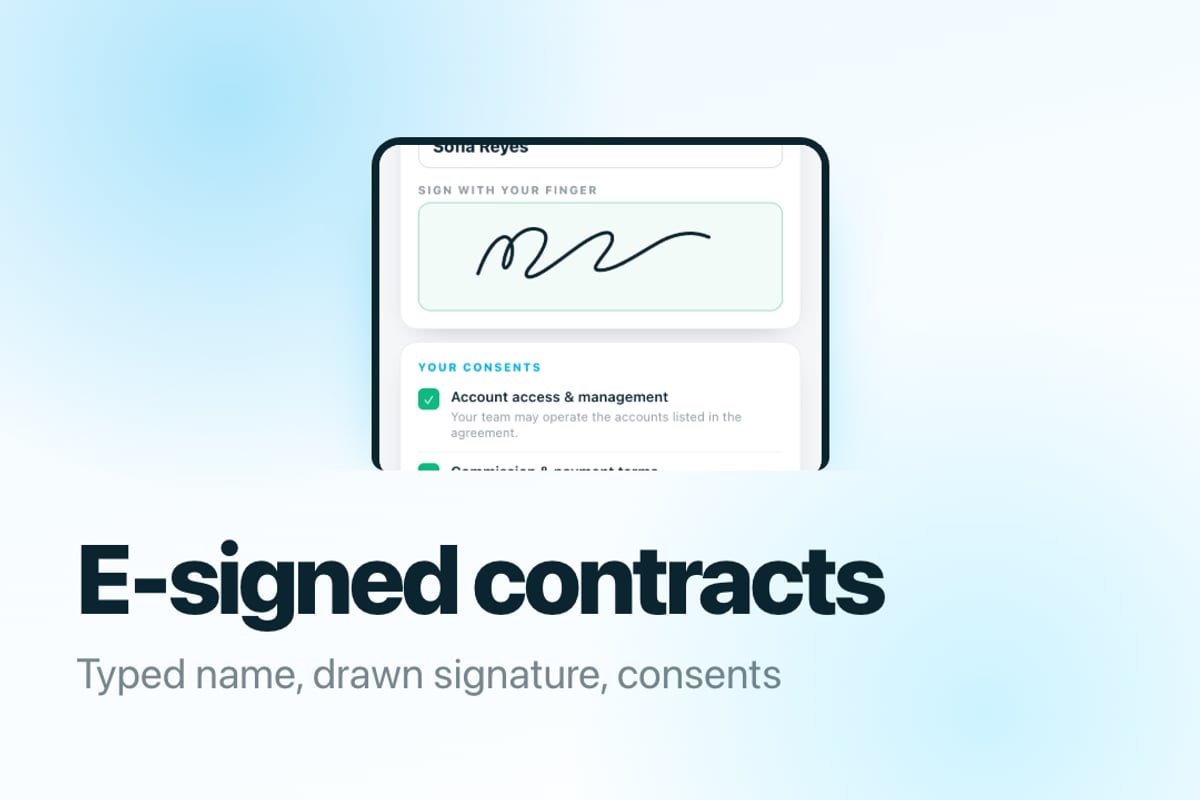
BIGROS streamlines this entire conversion phase by centralizing contracts, compliance tracking, and payment setup in one system. Rather than juggling separate tools for document signing, ID verification, and payout configuration, agency operators manage the full intake workflow on a single dashboard. This eliminates the data gaps and follow-up delays that cause qualified creators to ghost before signing.
Onboarding as Funnel Completion
The lead funnel doesn't end at contract signature-it completes when a creator generates first revenue. Agencies that neglect post-signature onboarding see 30-40% of signed creators never post content or abandon after initial attempts.
Your onboarding process for OFM models should launch immediately after contract execution:
- Platform setup (account creation, bio optimization, pricing configuration)
- Payment verification (bank connection, payout testing, tax form completion)
- Content planning (first week calendar, theme identification, equipment check)
- Chat team introduction (if applicable, messaging protocols, escalation process)
- First content review (quality standards, brand alignment, technical feedback)
Each milestone should trigger automatically based on the previous completion. When a creator connects their platform account, the system sends content planning templates. When first content uploads, quality review notifications fire to your team.
Measuring Funnel Health Across Stages
Track these metrics weekly to identify bottlenecks:
| Stage | Conversion Metric | Healthy Benchmark | Action Threshold |
|---|---|---|---|
| Inquiry to Application | Application completion rate | 60-70% | Below 50% |
| Application to Qualified | Qualification rate | 30-40% | Above 60% or below 20% |
| Qualified to Contract | Signing rate | 50-70% | Below 40% |
| Signed to Active | First content rate | 70-85% | Below 60% |
| Active to Revenue | First $1k in 30 days | 40-50% | Below 30% |
When conversion drops below thresholds, audit that specific stage. Low application completion often indicates form length or complexity issues. Poor qualification-to-contract rates suggest mismatch between expectations and reality during calls.

Systematic Lead Follow-Up and Re-Engagement
Not every qualified creator converts on first contact. Life circumstances change, initial hesitations resolve, or competitive situations shift. A 90-day re-engagement sequence captures creators who weren't ready initially.
Segment non-converters by drop-off point:
- Inquired but didn't complete application → Application simplification email, success story testimonial
- Completed application but didn't qualify → Skill-building resources, reapplication criteria
- Qualified but didn't sign contract → Updated earnings examples, limited-time onboarding incentive
- Signed but never went active → Technical support offer, simplified first-steps checklist
The integration of funnels with CRM systems ensures no creator falls through cracks. When every interaction logs automatically, follow-up sequences trigger based on behavior rather than manual tracking.
Scaling Your Funnel Infrastructure
Agencies managing 15-20 creators can operate funnels manually. Email threads, shared spreadsheets, and calendar reminders suffice at small scale. Growth beyond 30 models requires infrastructure that handles volume without proportional team expansion.
Consider your current intake capacity. If processing one creator from inquiry to active status requires 8-10 hours of team time across two weeks, simple math reveals your ceiling. A five-person team can onboard perhaps 10-15 creators monthly before quality suffers or burnout sets in.
Automation Leverage Points
Identify which funnel stages consume disproportionate time:
- Document collection: Automated upload portals with required-field validation
- Compliance verification: ID scanning software with age-verification API integration
- Contract generation: Template systems with auto-populated creator details
- Payment setup: Direct platform integration rather than manual configuration
- Content planning: Template libraries with automated delivery based on niche
When considering how to start an OnlyFans agency that scales beyond founder limitations, funnel automation separates sustainable businesses from operations that plateau.
Lead Quality vs. Lead Volume
The temptation to maximize inquiry volume drives many agencies toward broad marketing that attracts unsuitable creators. A funnel processing 500 monthly inquiries with 2% conversion generates 10 creators. A funnel processing 100 carefully targeted inquiries with 20% conversion generates 20 creators with fraction of the operational load.
Target your lead generation toward creators who match your successful creator profile. If your top earners share characteristics-existing audience size, content style, work ethic indicators-focus acquisition on similar prospects rather than casting wide nets.
This principle applies equally when recruiting OnlyFans models. Platforms, referral incentives, and marketing channels should target quality over quantity. The agencies that build high-converting funnels understand that 20 qualified inquiries outperform 200 casual ones.
Funnel Optimization Through Continuous Testing
Your initial funnel design represents hypothesis, not gospel. Monthly optimization cycles improve conversion rates systematically:
- Month 1-2: Establish baseline metrics across all stages
- Month 3: Test application form variations (length, question order, qualification thresholds)
- Month 4: Test email sequence timing and content
- Month 5: Test contract presentation formats
- Month 6: Test onboarding sequence structure
Change one variable per test cycle. When you simultaneously modify application questions, email timing, and contract format, you can't attribute results to specific changes. The fundamentals of building effective funnels emphasize iterative improvement based on data rather than assumptions.
Document what works. When a subject line variation increases email open rates by 15%, that becomes your new control. When simplified contract language improves signing rates, update templates permanently.
Common Funnel Failures in Creator Agencies
Three patterns kill conversion regardless of traffic quality:
Speed-to-contact failures doom prospects. When 48 hours pass between inquiry and first response, conversion rates drop 50-70%. Creators contact multiple agencies simultaneously-whoever responds first with clear next steps wins.
Complexity overload during intake creates abandonment. Applications requesting 20+ data points, multi-step document upload processes, or unclear timeline expectations lose qualified leads to simpler competitors.
Onboarding gaps between contract signing and revenue generation allow doubt to creep in. The two-week period after signing represents peak abandonment risk. Daily touchpoints, clear milestones, and visible progress tracking maintain momentum.
Frequently Asked Questions
How long should a creator lead funnel take from inquiry to active status?
High-performing agency funnels complete the full cycle in 7-14 days for qualified creators. Inquiry to qualification happens within 24-48 hours, qualification to contract signing within 3-5 days, and contract to first content within 5-7 days. Longer timelines introduce drop-off risk as creators pursue other opportunities or lose momentum.
What conversion rate should we expect from inquiry to signed creator?
Industry benchmarks suggest 8-15% conversion from total inquiries to signed contracts when including unqualified leads. If you pre-qualify before counting leads, expect 40-60% conversion from qualified applications to signed creators. Below 30% indicates friction in your contract process, compensation structure, or expectation alignment.
Should we charge application fees to improve lead quality?
Small application fees ($25-50) filter casual inquiries effectively but may eliminate price-sensitive creators who could perform well. Test both approaches: run paid applications for one month, free applications the next, and compare qualified-lead quality and conversion rates. Some agencies find free applications with rigorous qualification achieve better overall results than paid applications with lighter screening.
Implementing a systematic lead funnel transforms creator agencies from chaotic intake processes to predictable growth engines. When you measure conversions at each stage, automate repetitive tasks, and optimize based on data rather than assumptions, scaling beyond 20-30 models becomes operationally feasible. BIGROS centralizes your entire funnel-from inquiry capture through compliance verification to active roster management-so your team focuses on talent development rather than administrative chase.