
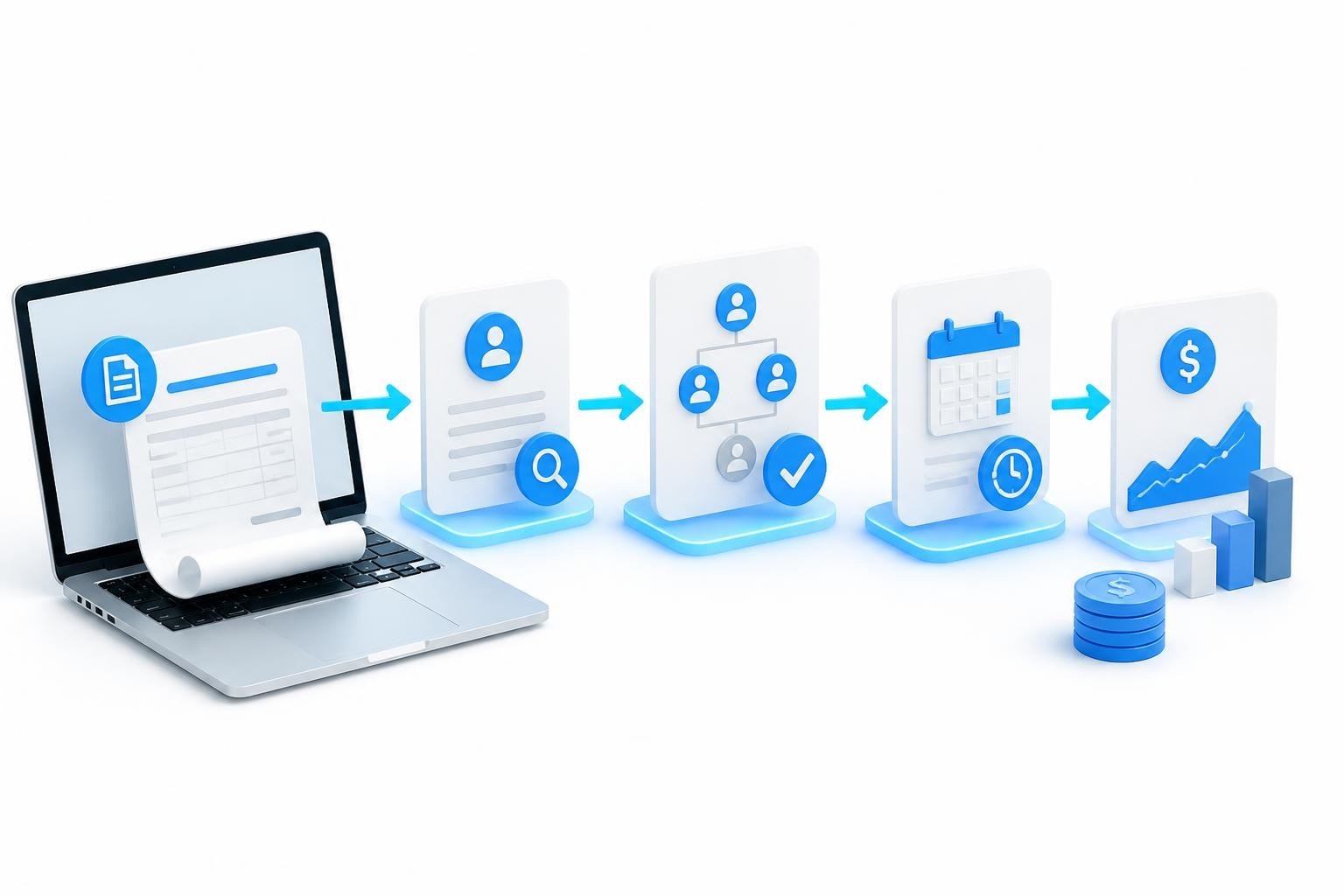
Running a creator agency means managing multiple revenue streams and just as many expense categories. From software subscriptions to contractor payments, payable invoices represent your outgoing financial obligations, and mismanaging them can quickly erode your profit margins. Whether you're scaling past your first 15 models or managing a roster of 50-plus creators, a systematic approach to invoice processing protects cash flow and prevents costly mistakes.
Why Payable Invoices Matter in Creator Agency Operations
Creator agencies operate on tight margins, especially in the early growth phase. Every dollar that leaves your business needs clear documentation, proper approval, and accurate tracking. Payable invoices create a paper trail for tax compliance, help you forecast cash needs, and ensure vendors get paid on time.
Poor invoice management leads to three critical problems: duplicate payments that waste capital, missed early payment discounts that could save thousands annually, and damaged vendor relationships that limit your negotiating power. When your team is focused on talent management and content strategy, financial chaos creates unnecessary friction.
The accounts payable process extends beyond simply paying bills. It encompasses verifying invoice accuracy, matching purchase orders, and maintaining audit trails that protect your business during tax season or financial reviews.
The Financial Stakes for Growing Agencies
Consider the typical expense categories for a 20-model agency: platform subscriptions for analytics and management tools, contractor payments for chatters and content editors, marketing spend for model acquisition, and compliance services for contracts and tax documentation. Each category generates regular payable invoices that require processing.
A single missed payment can result in service interruptions that impact multiple creators. Late fees compound quickly, turning a $500 monthly software bill into a $575 obligation. More critically, delayed contractor payments damage your reputation in a tight-knit industry where word travels fast.
| Expense Category | Monthly Volume | Processing Priority | Payment Terms |
|---|---|---|---|
| Software/Tools | 5-12 invoices | Medium | Net 30 |
| Contractors | 15-40 invoices | High | Weekly/Bi-weekly |
| Marketing | 3-8 invoices | Medium | Net 15-30 |
| Compliance | 2-5 invoices | High | Due on receipt |
Building an Invoice Processing System
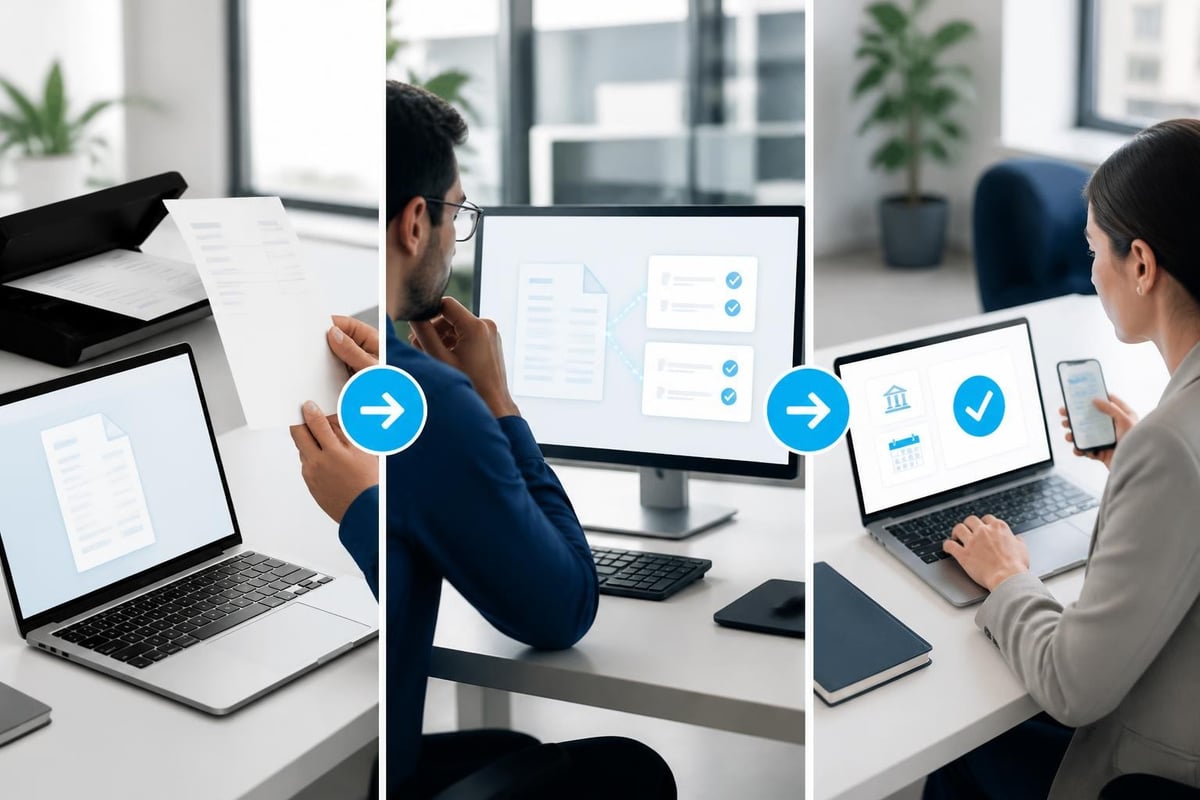
Centralizing how payable invoices enter your business eliminates the chaos of email threads, lost PDFs, and verbal agreements. Establishing a centralized invoice intake process ensures nothing slips through the cracks as your agency scales.
Creating a Single Point of Entry
Designate one email address ([email protected]) as the official channel for all vendor invoices. Train your team and vendors to use only this address. This simple step prevents invoices from hiding in personal inboxes or getting forwarded through multiple people before reaching your finance person.
Set up automated forwarding rules that copy invoices to your accounting system or dedicated folder structure. Many agencies use shared drives organized by vendor name and month, but the key is consistency. Every invoice should follow the same path from receipt to payment.
Implement these intake protocols immediately:
- Require vendors to submit invoices in PDF format with your agency name and purchase order number
- Establish submission deadlines (e.g., all invoices due by the 25th for month-end processing)
- Create a standard template for internal team members requesting vendor payments
- Set up automatic receipt confirmations so vendors know their invoice was received
Verification and Approval Workflows
Every payable invoice that enters your system needs verification before payment. This isn't about distrust; it's about protecting your business from errors, fraud, and contractual disputes. The verification process catches mistakes that vendors make and ensures you're paying only for services actually rendered.
Three-Way Matching for Major Expenses
For significant purchases above your threshold (typically $1,000-$5,000), implement three-way matching. This process compares the purchase order you issued, the goods or services receipt confirmation, and the vendor invoice to ensure all three documents align.
Start by confirming the invoice matches the original purchase agreement. Check quantities, rates, and terms. A vendor might invoice for 10 licenses when you only ordered and received 5, or bill at last year's rate instead of your negotiated discount.
Next, verify that someone on your team confirmed receipt of the goods or services. For software, this might be a login confirmation. For contractor work, it's deliverable approval. This step prevents paying for work that wasn't completed or services that weren't activated.
The three-way matching process significantly reduces payment errors and creates documentation that protects you if disputes arise later.
Establishing Approval Hierarchies
Different invoice types need different approval levels. A $50 stock photo subscription might not require executive sign-off, but a $5,000 marketing campaign certainly does. Define clear dollar thresholds and assign approvers by authority level.
Sample approval hierarchy for creator agencies:
- Under $500: Team lead approval
- $500-$2,500: Operations manager approval
- $2,500-$10,000: Director approval
- Above $10,000: Owner/executive approval
Build these approvals into your workflow software rather than relying on email chains. When an invoice arrives, the system should automatically route it to the correct approver based on amount and category. This speeds processing and creates an audit trail showing who authorized each payment.
Payment Scheduling and Cash Flow Management
Paying every invoice the day it arrives creates unnecessary cash flow pressure. Strategic payment scheduling optimizes your working capital while maintaining vendor relationships. Understanding payment terms and using them to your advantage is fundamental financial management.
Most vendors offer Net 30 or Net 15 terms, meaning payment is due 30 or 15 days after invoice date. Some offer 2/10 Net 30, providing a 2% discount if you pay within 10 days. Run the math on these discounts because they represent annual returns of 36% or higher.
Creating a Payment Calendar
Batch your payable invoices into regular payment runs rather than processing them individually. Many agencies run AP twice monthly: mid-month for urgent vendor payments and contractor expenses, and month-end for recurring subscriptions and less time-sensitive bills.
This batching approach reduces administrative overhead and gives you better visibility into upcoming cash needs. You can look at your payment calendar on the 1st and know exactly how much cash needs to be available on the 15th and 30th.
For agencies managing model payouts alongside vendor payments, synchronizing these cycles prevents cash crunches. If you pay creators on the 5th and 20th, schedule vendor payments for the 10th and 25th after platform revenue hits your account.
| Payment Type | Frequency | Typical Due Date | Cash Reserve Needed |
|---|---|---|---|
| Creator Splits | Bi-weekly | 5th & 20th | 60-70% of gross |
| Contractors | Weekly/Bi-weekly | Fridays | 15-20% of gross |
| Subscriptions | Monthly | Various | 5-8% of gross |
| Marketing | As incurred | Net 15-30 | 10-15% of gross |
Managing these payment streams effectively becomes exponentially more complex as you scale. When you're running a comprehensive agency operation with multiple software tools and systems, centralizing invoice management within your operating platform streamlines the entire workflow.
Preventing Common Invoice Processing Errors
Duplicate payments represent one of the most expensive mistakes in accounts payable. They occur when an invoice gets entered twice due to vendor resubmission, multiple team members processing the same bill, or simple data entry errors. A robust system prevents duplicates before they happen.
Implementing Duplicate Detection
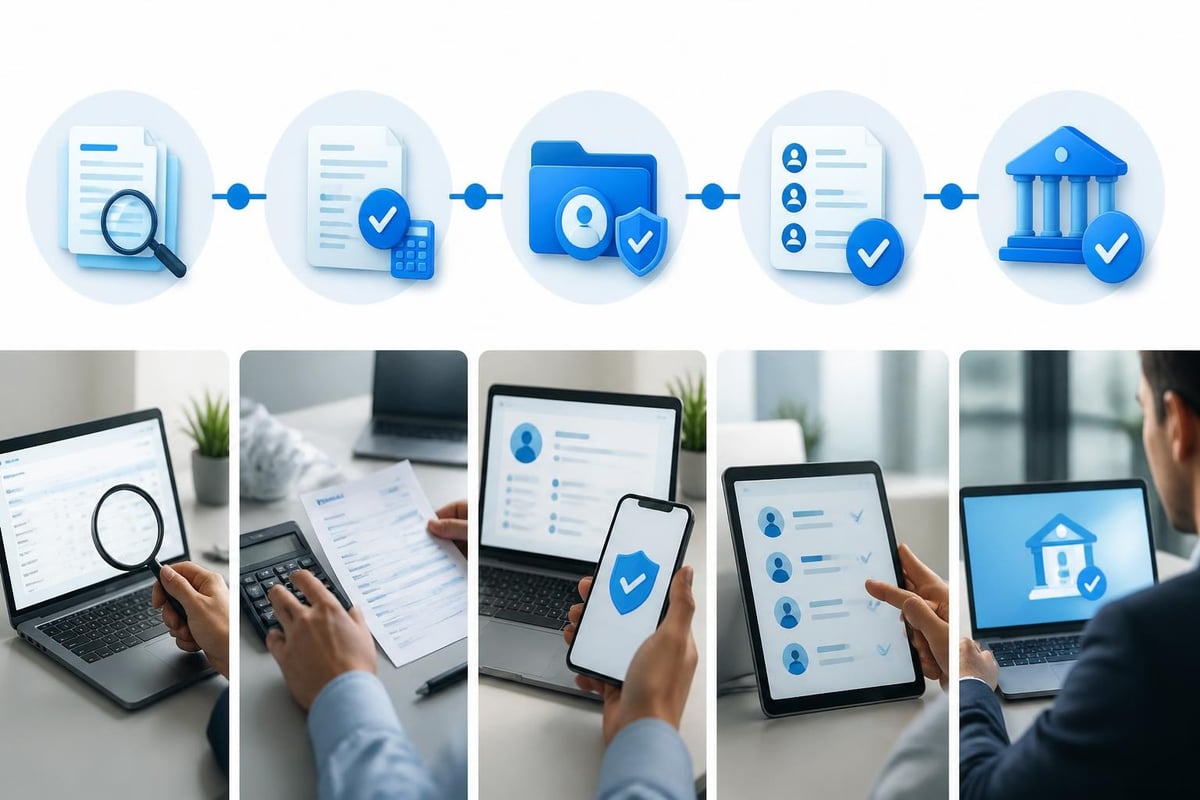
Before entering any payable invoice, search your system for matching vendor name, invoice number, and amount. Most accounting software includes duplicate detection, but it only works if you use it consistently. Train anyone with AP access to run this check every single time.
Watch for vendors who submit the same invoice through multiple channels. They might email it to three people on your team, hoping for faster payment. Without coordination, all three recipients might process it independently.
Red flags that indicate potential duplicates:
- Same vendor, same amount, dates within 30 days of each other
- Sequential invoice numbers with identical line items
- Rounded amounts that match previous invoices exactly
- Vendor confirms payment received but shows outstanding balance
Managing Recurring Invoices
Software subscriptions and monthly service fees generate predictable payable invoices. Set up these recurring items in your accounting system so you can compare new invoices against expected amounts. A sudden increase might indicate an unauthorized upgrade or billing error.
Review all recurring invoices quarterly to identify services you no longer use. Agencies frequently maintain subscriptions to tools that were tested during onboarding but never became part of standard operations. These forgotten subscriptions can drain thousands annually.
Vendor Relationship Management Through AP
How you handle payable invoices directly impacts vendor relationships, which matters more than most agency owners realize. Vendors who trust your payment reliability offer better terms, prioritize your requests, and provide flexibility during cash flow challenges.
Pay attention to streamlining vendor payment processes because it strengthens these critical business relationships. Vendors remember who pays on time and who requires constant follow-up.
Negotiating Better Payment Terms
Once you've established a track record of reliable payments, approach key vendors about extended terms or volume discounts. If you're paying a software provider $2,000 monthly and always pay within 15 days, ask for Net 45 terms or a 10% discount for annual prepayment.
Calculate the cash flow impact of different payment terms. Moving from Net 15 to Net 30 on a $5,000 monthly expense effectively provides a $5,000 interest-free loan. Across multiple vendors, these extensions can free up significant working capital for growth investments.
Building Vendor Communication Protocols
Establish clear communication channels for invoice questions and disputes. When you need to contest an invoice or request documentation, having a direct contact who knows your account saves time and reduces friction.
Create a vendor contact database that includes primary contacts, escalation paths, payment inquiry emails, and preferred communication methods. Update this regularly as vendor account managers change, which happens frequently in the software industry.
Some vendors offer early payment discounts that deliver returns exceeding what you'd earn in savings accounts. A 2% discount for paying 20 days early represents an annualized return of over 36%. If cash flow allows, these discounts are worth taking.
Compliance and Audit Trail Requirements
Payable invoices serve as critical documentation for tax deductions, financial audits, and legal disputes. Proper record keeping isn't optional; it's a regulatory requirement that protects your business during IRS audits or vendor disagreements.
The IRS requires businesses to maintain supporting documentation for all deductible expenses. Every payable invoice should include vendor name, date, description of goods or services, amount, and payment method. Missing any of these elements can result in disallowed deductions during audits.
Document Retention Policies
Store all invoice documentation for at least seven years, which is the IRS lookback period for substantial underreporting. Digital storage is acceptable and preferable to physical files, but ensure you have secure backups and can retrieve specific invoices quickly.
Organize digital files in a consistent folder structure: Year > Month > Vendor. Use clear naming conventions like "2026-03-VendorName-InvoiceNumber.pdf" that make searches efficient. This structure proves invaluable when your accountant needs documentation during tax preparation.
Essential documents to maintain with each invoice:
- Original vendor invoice with all line items
- Purchase order or service agreement
- Receipt confirmation or deliverable approval
- Payment confirmation (check image, ACH confirmation, wire receipt)
- Any correspondence about pricing, terms, or disputes
For agencies dealing with compliance-heavy operations, maintaining organized financial records extends beyond vendor invoices to creator contracts, tax forms, and regulatory documentation.
Automation Opportunities in Invoice Processing
Manual invoice processing doesn't scale. When you're managing payable invoices for 5-10 vendors, spreadsheets and email might suffice. At 20+ vendors and 50+ invoices monthly, automation becomes necessary for accuracy and efficiency.
Optical character recognition (OCR) technology extracts data from invoice PDFs automatically, eliminating manual data entry. Modern invoice automation systems can read invoices, match them to purchase orders, route them for approval, and schedule payments with minimal human intervention.
Choosing the Right Automation Level
Not every agency needs enterprise-grade accounts payable automation. Start by identifying your highest-volume, most time-consuming invoice categories. Automating contractor payments or recurring subscriptions delivers immediate value before tackling one-off vendor bills.
Integration capability matters more than feature lists. Your invoice system should connect with your accounting software, bank accounts, and ideally your broader agency management platform. Data flowing between systems without manual export and import saves hours weekly.
Consider these automation priorities in order:
- Recurring invoice recognition: System flags expected monthly bills and highlights variances
- Approval routing: Invoices automatically go to the right approver based on rules you define
- Payment scheduling: Approved invoices queue for payment on their optimal date
- Reconciliation matching: Bank transactions automatically match to paid invoices
- Exception handling: System alerts you to duplicates, missing purchase orders, or unusual amounts
Measuring Automation ROI
Track time spent on invoice processing before and after implementing automation. The goal isn't eliminating human oversight but reducing low-value data entry and routing tasks. A good automation system should cut processing time by 60-80% while improving accuracy.
Calculate cost per invoice processed by dividing total AP labor costs by monthly invoice volume. Industry benchmarks suggest $5-$15 per invoice for manual processing versus $2-$5 with automation. For an agency processing 100 invoices monthly, that's $500-$1,000 in monthly savings.
Frequently Asked Questions
How long should I keep payable invoice records?
Maintain all invoice documentation for at least seven years to comply with IRS requirements. Digital storage with secure backups is the most practical approach for long-term retention. Organize files by year and vendor for quick retrieval during audits or disputes.
What's the difference between accounts payable and payable invoices?
Accounts payable is the complete system and process for managing all money your business owes. Payable invoices are the individual documents that create those obligations. Think of accounts payable as the department or function, and payable invoices as the items that department processes.
Should I pay invoices early to get discounts?
Early payment discounts typically offer 1-2% for paying 10-20 days ahead of standard terms. Calculate the annualized return-it often exceeds 20-30%. If cash flow allows and you're earning less than that on idle cash, take the discount. However, never compromise payroll or critical expenses to capture vendor discounts.
Integration with Broader Agency Financial Management
Payable invoices don't exist in isolation from your other financial processes. The most successful agencies integrate AP with revenue tracking, creator payouts, and profit analysis to maintain real-time visibility into financial health.
When evaluating how much you can afford to spend on a new marketing campaign or contractor hire, you need to see not just current cash balances but upcoming payable obligations. Understanding your true profit margins requires accurate expense tracking across all categories.
Connect your invoice payment schedule with revenue forecasting. If you know platform payouts hit your account on the 3rd and 18th, you can confidently schedule vendor payments for the 5th and 20th without risking overdrafts. This synchronization becomes increasingly important as your roster scales and monthly cash flow reaches six or seven figures.
For agencies managing complex onboarding workflows alongside day-to-day operations, centralizing all financial and operational data in a single platform eliminates the constant context switching between multiple tools and spreadsheets.
Scaling Your AP Process Past 50+ Monthly Invoices
Growth creates new challenges in invoice management. The informal approval process that worked when you and a partner ran everything breaks down when you have department heads, team leads, and specialized roles. Formalize your processes before the chaos forces you to.
Document every step of your payable invoice workflow in a standard operating procedure (SOP). New hires should be able to read this document and understand exactly how to submit vendor requests, what approval they need, and when payment will occur. Update the SOP quarterly as your processes evolve.
Assign clear ownership for accounts payable. This doesn't necessarily require a full-time hire initially, but one person should own the entire function from invoice receipt through reconciliation. Splitting AP responsibilities across multiple people without clear accountability creates gaps where invoices get lost.
Building Financial Controls at Scale
As monthly invoice volume exceeds 50-75 items, implement segregation of duties. The person who approves invoices shouldn't be the same person who processes payments. This basic control prevents both errors and fraud.
Set up regular AP reviews where someone independent spot-checks a sample of processed invoices. Look for proper documentation, appropriate approval levels, and accurate coding to expense categories. These reviews catch process breakdowns before they become expensive problems.
Financial controls shouldn't slow down legitimate expenses. Well-designed controls actually speed processing by catching errors early and establishing clear expectations for everyone involved. The goal is protecting the business while maintaining operational efficiency.
Managing payable invoices effectively protects your agency's cash flow, maintains vendor relationships, and creates the financial documentation you need for tax compliance and strategic decision-making. As your roster scales, the systems you build today determine whether invoice processing remains manageable or becomes a bottleneck that limits growth. BIGROS centralizes invoicing, payroll, and live P&L tracking in one operating system designed specifically for creator agencies, eliminating the spreadsheet chaos and giving you real-time visibility into every dollar flowing through your business.