
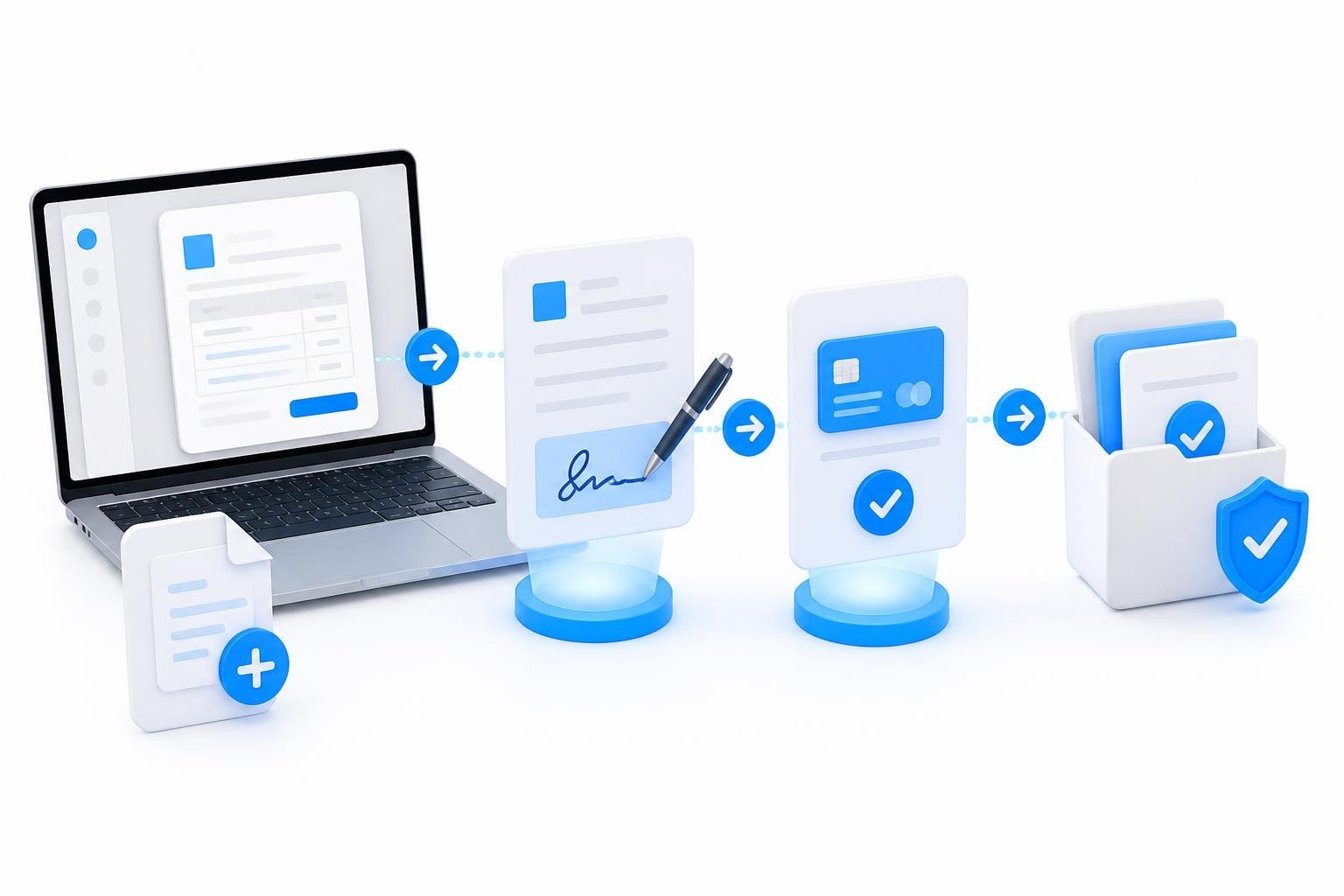
When you're managing fifteen or more models and juggling multiple revenue streams, the ability to properly sign invoice documents becomes critical infrastructure. Every payment cycle generates dozens of invoices that require authorized signatures, whether you're billing clients for management fees or paying out model commissions. Getting this process wrong creates legal exposure, delays payments, and signals unprofessionalism to your talent roster.
Why Proper Invoice Signatures Matter in Creator Agency Operations
A signed invoice serves as a legally binding agreement between parties. When you sign invoice documents, you're verifying the accuracy of the charges, confirming the services rendered, and creating an audit trail that satisfies both tax authorities and potential disputes.
For OFM agencies, this becomes particularly important because you're often operating in a three-party structure: the platform, the creator, and your agency. Each invoice needs to clearly indicate which entity is responsible for what. Without proper signatures, you risk payment disputes, compliance issues during tax season, and potential problems if a model questions their payout calculations.
Legal Requirements for Invoice Signatures
The United States recognizes electronic signatures as legally binding under the ESIGN Act and UETA, which means you don't need wet signatures on every document. However, the signature must meet specific criteria to be enforceable.
According to legal requirements for signed invoices, a valid signature demonstrates:
- Intent to sign the document
- Consent to conduct business electronically
- Association of the signature with the specific record
- Retention of the signed document
Electronic signatures carry the same legal weight as handwritten ones, provided you follow proper implementation procedures. This changes the game for agencies processing high volumes of invoices monthly.

Setting Up Your Invoice Signing Workflow
Most agencies start with manual processes: generate invoice in accounting software, export to PDF, email to signer, wait for signed copy, manually file the document. This breaks down rapidly once you're managing more than a handful of models.
Choosing the Right Signature Solution
Your signature workflow needs to integrate with your existing systems. For creator agencies using comprehensive platforms like those discussed in our guide on OnlyFans agency management software, the signature process should connect directly to your invoicing module.
When evaluating solutions, prioritize these features:
- API integration with your invoice generation system
- Bulk signing capabilities for processing multiple documents simultaneously
- Audit trails that timestamp every action and store signer IP addresses
- Mobile accessibility since many models sign documents from phones
- Automatic reminders for unsigned invoices approaching payment deadlines
Implementation Best Practices
Best practices for electronic signatures emphasize the importance of clear communication with signers. When you send an invoice to sign, the email should explain what they're signing, why it requires their signature, and the deadline for completion.
Create template language for your signature requests:
"This invoice covers your management fees for [period]. Please review the line items carefully and sign to confirm accuracy. Your signature authorizes payment processing on [date]."
Never rush signers through the process. A signature obtained under pressure or without proper review creates more problems than it solves. Build buffer time into your payment cycles to account for signature delays.
Managing Model Payment Invoices
The most common invoice signature scenario in creator agencies involves model payouts. You generate an invoice detailing their earnings, deductions, and net payment, then require their signature before processing the transfer.
This serves multiple purposes: it confirms they've reviewed their earnings breakdown, creates documentation for their tax records, and protects your agency if questions arise later about payment calculations.
Structuring Payout Invoices
Your payout invoice should include:
| Element | Details |
|---|---|
| Gross earnings | Total platform revenue for the period |
| Agency commission | Your agreed percentage clearly calculated |
| Deductions | Any chargebacks, advances, or expenses |
| Net payment | Final amount being transferred |
| Payment method | Bank account, payment processor, or other |
| Payment date | When funds will be available |
When models sign invoice documents for payouts, they're acknowledging these figures as accurate. This becomes crucial when handling how to pay OnlyFans creators at scale, where even small discrepancies multiply across your roster.

Handling Signature Disputes
Occasionally a model will refuse to sign invoice documents because they disagree with the calculations. This is actually a benefit of requiring signatures rather than a problem it creates visibility before payment rather than disputes after.
Document everything during dispute resolution. If a model questions their commission rate, pull up the signed management contract. If they dispute a chargeback deduction, provide the platform documentation. The invoice signature should only happen after both parties agree the numbers are correct.
Client Billing and Agency Revenue Documentation
The flip side of model payouts is billing your clients, whether that's individual creators who pay management fees or brands purchasing promotion packages. These invoices require your authorized signature as the service provider.
Understanding OnlyFans agency commission rates helps you structure your billing correctly, but the signature process ensures those rates are properly documented and legally enforceable.
Authorized Signers in Your Agency
As you scale past fifteen models, you need clear policies about who can sign invoice documents on behalf of the company. Typically this includes:
- Business owners or partners
- Financial controllers
- Operations managers with specific authorization
Create a signature authority matrix that specifies dollar thresholds. An operations manager might be authorized to sign invoices under $5,000, while higher amounts require owner approval. This balances efficiency with financial control.
Compliance and Record Retention
The legal framework for electronic invoices requires maintaining signed copies in a format that preserves the signature's integrity. You cannot simply save unsigned versions and claim they were signed.
Your retention system needs to:
- Store each signed invoice as a tamper-evident file
- Include metadata showing signature date, time, and signer identity
- Remain accessible for the statute of limitations period (typically 3-7 years)
- Allow quick retrieval during audits or disputes
Integrating Signatures with Financial Systems
The most efficient agencies don't treat invoice signatures as a separate process. Instead, they integrate signing into the natural workflow: generate invoice → send for signature → upon signing, automatically record in accounting system and trigger payment processing.
For agencies looking to streamline these operations, Creator Agency Operating System handles the entire invoicing pipeline on one platform. Enquiries, onboarding, contracts, invoices, and live P&L tracking work together, eliminating the manual handoffs that slow down traditional workflows.
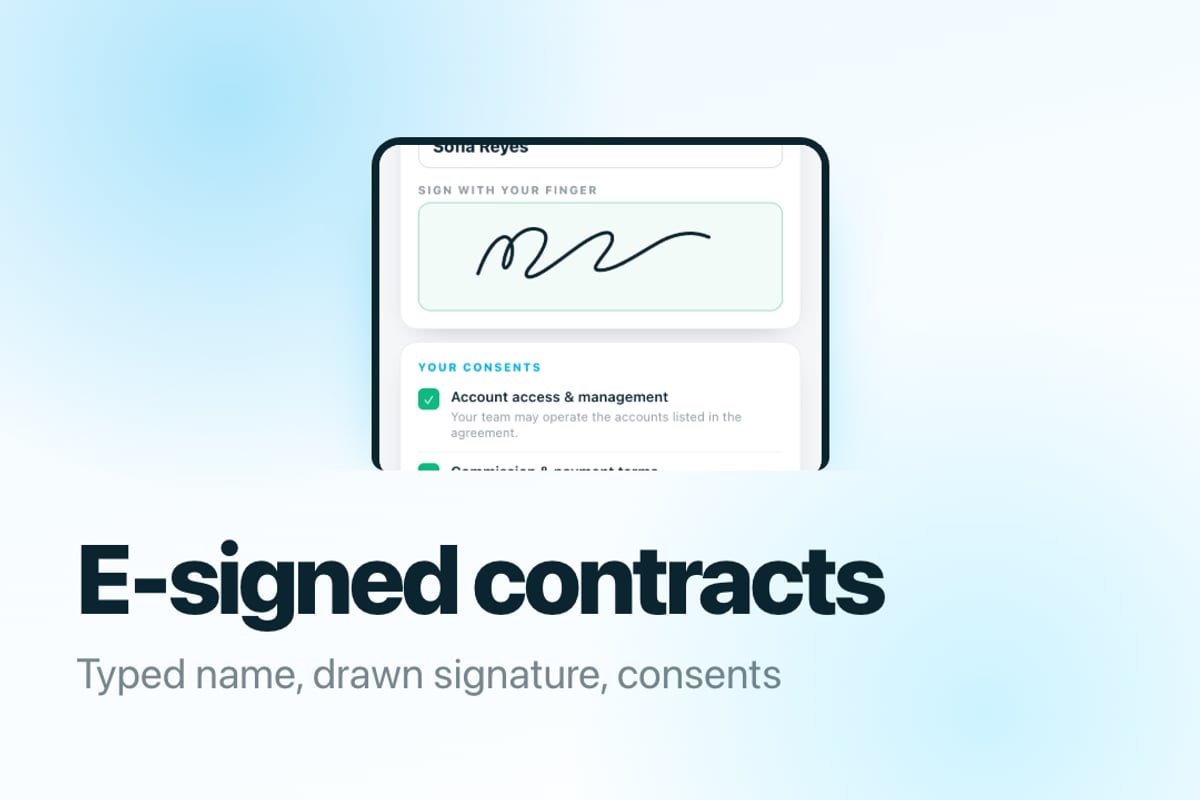
This integration approach, discussed in our comparison of OnlyFans agency spreadsheet vs software, eliminates the data entry that causes most signature-related delays and errors.
Automation Strategies for High-Volume Signing
Once you're processing 50+ invoices monthly, manual signature management becomes a bottleneck. The answer is intelligent automation that handles routine cases while flagging exceptions for human review.
Triggering Automatic Signature Requests
Set up workflows that automatically generate and send invoices for signature based on calendar events:
- First business day of each month: generate model payout invoices
- Upon service completion: generate client billing invoices
- 48 hours before payment run: send signature reminders for unsigned invoices
The goal is zero manual intervention for standard cases. Your team should only touch invoices that have exceptions, disputes, or require special handling.
Bulk Signing for Agency Invoices
When you're signing dozens of outgoing invoices, use batch processing. Review all invoices in a single session, verify the calculations match your expectations, then apply your signature to the entire batch with one authorization.
This requires trust in your invoice generation system, which is why integrated platforms matter. If your invoicing module pulls data directly from the same database that tracks creator earnings and client contracts, you can confidently sign invoice batches knowing the underlying data is consistent.
Common Invoice Signature Mistakes to Avoid
Even experienced agencies make preventable errors that create legal or operational problems down the line.
Never sign invoice documents before services are complete. This seems obvious, but during growth phases, some agencies pre-sign invoices to speed up payment cycles. This creates legal exposure because you're certifying work that hasn't happened yet.
Don't use generic signature blocks. Each invoice should clearly identify the specific person signing and their authority to do so. "Authorized Signature" tells you nothing if there's a dispute three years later about whether this person had signing authority.
Avoid informal signature methods. Typing "/s/ John Smith" in an email doesn't create the audit trail and legal protections of proper electronic signature platforms that comply with e-signature legal frameworks.
Version Control Issues
When invoices go through multiple revisions before signing, ensure you're signing the final version. Version control failures lead to situations where the signed invoice doesn't match the invoice that was paid, creating reconciliation nightmares during tax season.
Implement these controls:
- Lock invoice documents once sent for signature
- If changes are needed, void the original and generate a new invoice number
- Never edit an invoice after signature without explicit written agreement from both parties
- Maintain a change log for any modified invoices
Frequently Asked Questions
Do both parties need to sign invoice documents?
In most creator agency scenarios, only one party signs. For model payouts, the model signs to acknowledge receipt and agreement. For client billing, your agency signs as the service provider. Both signatures are rarely required unless the invoice also serves as a service agreement.
How long should we wait for invoice signatures before following up?
Send automatic reminders at 24 hours, 48 hours, and 72 hours after sending. If the invoice remains unsigned after 72 hours and payment is time-sensitive, follow up personally. Most signature delays stem from emails getting buried, not intentional avoidance.
Can we process payments before receiving signed invoices?
Legally you can, but operationally you shouldn't for amounts over $500. The signature protects both parties by confirming agreement before money moves. Processing payment before signature removes your leverage if there's a dispute about the amount.
What happens if someone claims they never signed an invoice?
This is why proper electronic signature platforms matter. They capture IP addresses, timestamps, and often require email verification before signing. According to electronic signature best practices, these audit trails make repudiation extremely difficult. If you're using email-based informal signatures, you have much weaker protection.
Should invoices for recurring services be signed monthly?
Yes, even for predictable recurring charges. The signature confirms the service was actually delivered that month and provides a checkpoint for catching billing errors before they compound. Many agencies automate this by sending the same invoice template monthly with updated dates and amounts.
Integration with Broader Agency Operations
Invoice signing doesn't exist in isolation. It connects to your OnlyFans agency compliance checklist, your tax documentation, your model onboarding processes, and your financial reporting.
When evaluating how to sign invoice documents, consider the downstream effects. Signed invoices feed into your accounting system, which generates your profit and loss statements, which inform your scaling decisions about how to recruit OnlyFans models and expand your roster.
The agencies that scale smoothly past twenty models treat invoice signatures as infrastructure, not administration. They build systems that make signing effortless for everyone involved while creating bulletproof documentation for compliance and dispute resolution.
The signature itself takes seconds. The value comes from the workflow around it: accurate invoice generation, clear communication about what's being signed, proper storage of signed documents, and integration with payment processing. Get these foundations right, and invoice signatures become an invisible but crucial part of your operations rather than a bottleneck that slows everything down.
Managing invoice signatures properly protects your agency legally while building trust with your model roster. When you're ready to handle invoicing, compliance, payroll, and live P&L tracking in one integrated platform designed specifically for creator agencies, explore what BIGROS can do for your operations.