

Every creator agency owner knows the frustration of chasing the wrong talent. You spend hours on calls with models who never sign, or worse, you onboard creators who underperform and drain resources. The difference between agencies that scale past twenty models and those that plateau often comes down to how systematically they evaluate incoming talent. Lead models provide the structured frameworks that separate high-potential creators from time-wasters before you invest a single hour in onboarding.
Understanding Lead Models in the Creator Economy
Lead models are systematic frameworks for evaluating, scoring, and prioritizing potential talent based on quantifiable criteria and predicted outcomes. In the creator agency space, these models help you assess which OnlyFans models will generate revenue, stay compliant, and require reasonable support levels. Rather than relying on gut feeling or first-come-first-served approaches, agencies using structured lead models can predict performance with reasonable accuracy.
The concept draws from lead scoring methodologies used across B2B sales, but adapted for the unique dynamics of creator management. Traditional lead scoring ranks prospects by likelihood to convert and lifetime value. For creator agencies, your "conversion" is a signed management contract, and your "lifetime value" is the revenue a model generates over their active months minus support costs.
Core Components of Creator Lead Models
Effective lead models for agency talent acquisition typically incorporate four primary dimensions:
- Current metrics: existing follower counts, engagement rates, content consistency, platform presence
- Growth indicators: audience growth trajectory, content quality trends, engagement velocity
- Operational fit: communication responsiveness, compliance readiness, technical capability, timezone alignment
- Revenue potential: niche profitability, monetization history, willingness to invest in content production
Each dimension receives weighted scoring based on your agency's specific priorities. An agency specializing in helping new creators might weight growth indicators and operational fit higher, while an agency focused on established talent prioritizes current metrics and proven revenue.

Building Your First Lead Qualification Framework
Start with a simple pass/fail qualification gate before investing time in detailed scoring. This initial filter prevents your team from burning hours on applications that will never convert into profitable relationships.
Mandatory Qualification Criteria
Establish absolute requirements that every potential model must meet. These typically include:
- Age verification capability: Can provide government ID and complete compliant age verification
- Right to work: Legal authorization to earn income in relevant jurisdictions
- Communication baseline: Responds to initial inquiry within 48 hours with coherent messages
- Realistic expectations: Understands agency commission structures and has appropriate revenue expectations
- Content ownership: Has rights to all content they plan to monetize
Models who fail any mandatory criterion get a polite decline immediately. This protects your agency from compliance issues and saves your team from pursuing deals that cannot close legally or profitably.
Tiered Scoring System
Once a model passes mandatory qualifications, implement a point-based scoring system. Here's a proven structure used by agencies managing 30+ creators:
| Criteria Category | Weight | Scoring Range | Key Factors |
|---|---|---|---|
| Current Performance | 30% | 0-30 points | Followers, engagement rate, existing revenue |
| Growth Trajectory | 25% | 0-25 points | 90-day follower growth, content frequency increase |
| Operational Readiness | 25% | 0-25 points | Response time, tech skills, scheduling reliability |
| Revenue Potential | 20% | 0-20 points | Niche demand, pricing strategy, upsell willingness |
Models scoring 70+ points receive immediate outreach for onboarding. Those scoring 50-69 go into a nurture sequence. Below 50, you send a polite decline with an invitation to reapply after improving specific metrics.
Advanced Lead Models for Scaling Agencies
As your roster grows beyond fifteen models, basic scoring becomes insufficient. You need predictive models that forecast not just whether a creator will sign, but how they'll perform six months post-onboarding.
Cohort-Based Performance Analysis
Review your existing roster and segment models into performance tiers based on actual revenue generated. Then reverse-engineer what application characteristics predicted success. You'll often discover surprising patterns.
One agency found that models who asked detailed questions about content calendars during initial calls generated 40% more revenue than those focused primarily on payout timing. Another discovered that creators with 2,000-5,000 followers converted better than those with 10,000+ because they were more coachable and had fewer existing commitments.
Document these patterns into weighted criteria. If your data shows Instagram engagement rate matters more than follower count, adjust your lead models accordingly. The most effective frameworks evolve quarterly based on actual cohort performance.
Behavioral Predictors vs. Vanity Metrics
Stop overweighting follower counts and start tracking behavioral signals that predict long-term success:
- Response time to your initial outreach (faster = better retention)
- Quality of questions asked during discovery calls (detailed questions = higher performance)
- Existing content consistency (posting 4+ times weekly = lower support burden)
- Willingness to discuss financials transparently (open discussion = fewer payout disputes)
- References to long-term goals (career planning = better retention past six months)
These behavioral indicators often predict success better than traditional metrics. Research into lead validation across industries consistently shows that engagement signals outperform demographic data for conversion prediction.

Implementing Lead Models in Your Daily Operations
Theory means nothing without execution. Here's how to embed lead models into your agency workflow without creating administrative burden.
Automated Initial Scoring
Your intake form should collect data that feeds directly into your scoring model. When a creator completes your application, your system should automatically calculate their initial score based on quantifiable inputs.
For agencies using creator agency operating systems, this automation happens within the platform. Applications trigger automatic scoring based on your configured criteria weights, and high-scoring leads get flagged for immediate team follow-up.
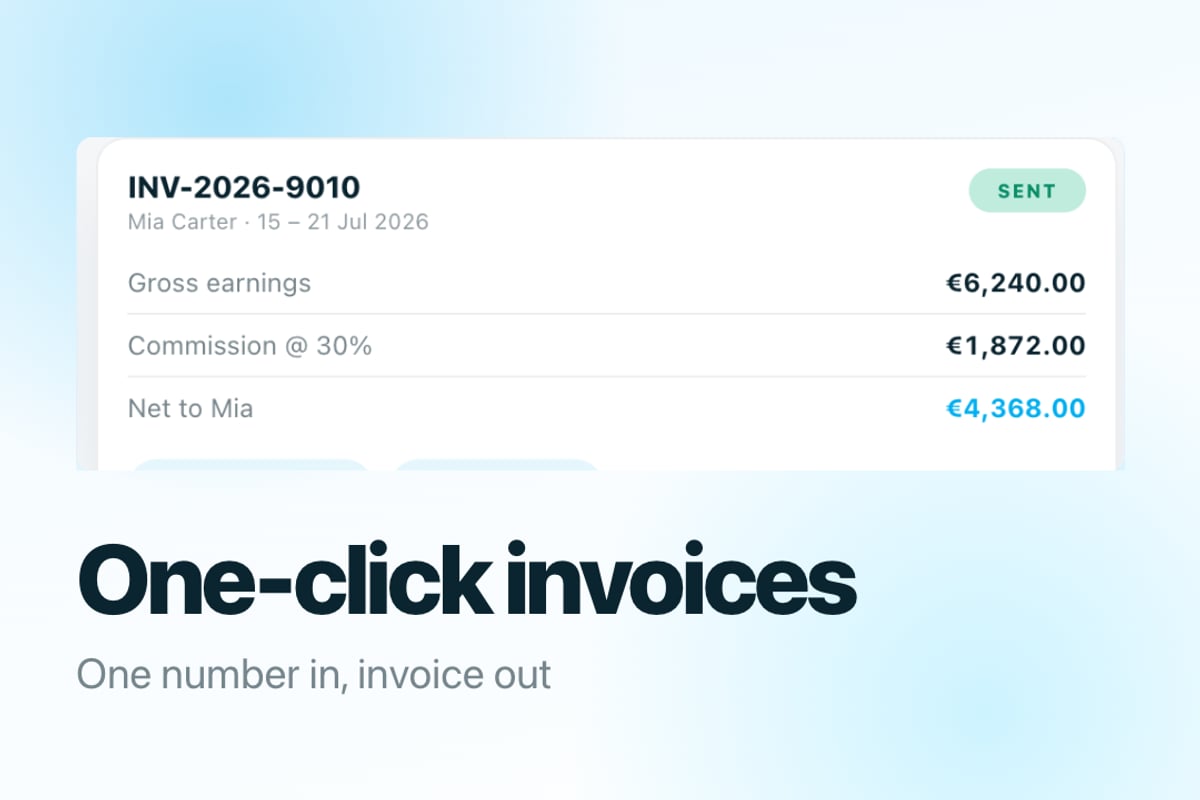
BIGROS centralizes your entire lead pipeline on one dashboard, automatically scoring incoming model applications against your custom criteria and routing top prospects to your onboarding team while lower-scoring inquiries enter nurture workflows. This systematic approach ensures you never miss a high-potential creator while protecting your team's time from low-fit inquiries.
Manual Review Triggers
Automation handles the first pass, but experienced eyes catch nuances. Configure your system to flag applications for manual review when:
- Scores fall within 10 points of your acceptance threshold (45-55 in a 70+ acceptance model)
- Creators have unique niches not well-represented in your current roster
- Applications show conflicting signals (high current metrics but poor communication)
- Referrals come from existing high-performing models
Manual review adds 5-10 minutes per borderline application but prevents you from automatically rejecting talent who might thrive with your support structure.
Optimizing Lead Models Through Continuous Testing
Your initial lead models will be wrong. That's expected. The agencies that scale successfully treat their qualification frameworks as living documents that improve through systematic testing.
A/B Testing Qualification Criteria
Run controlled experiments on your acceptance criteria. For one month, accept models scoring 60+ instead of your usual 70+ threshold. Track their performance against your standard cohort. If the lower-threshold group performs within 15% of your standard tier, you've been too restrictive and are leaving revenue on the table.
Alternatively, test raising your threshold to 75+ for one month. If this group significantly outperforms your standard cohort, you're wasting resources on marginal talent. Understanding cost per lead dynamics helps you calculate whether tighter qualification improves your economics even if it reduces total volume.
Tracking Predictive Accuracy
Every model you onboard provides data to refine your scoring accuracy. Six months post-onboarding, compare predicted performance scores against actual revenue, support burden, and retention.
Build a simple tracking table:
| Model ID | Initial Score | Predicted Tier | 6-Month Revenue | Actual Tier | Variance |
|---|---|---|---|---|---|
| MOD-047 | 78 | High | $47,300 | High | Accurate |
| MOD-048 | 82 | High | $12,100 | Low | Over-predicted |
| MOD-049 | 64 | Medium | $38,900 | High | Under-predicted |
When you spot consistent over-prediction or under-prediction, investigate which criteria are misleading. Maybe you're overweighting Instagram followers when TikTok engagement actually predicts better performance for your agency's approach.
Integrating Lead Models with Your Recruitment Strategy
Lead models work best when aligned with your broader model recruitment strategy. Your outbound efforts should target creators who score well in your framework, while your inbound application process should collect the data your model needs.
Sourcing from High-Probability Channels
Once you know what characteristics predict success, you can reverse-engineer where to find those creators. If your data shows models with active TikTok accounts outperform those primarily on Instagram, shift prospecting efforts accordingly.
Different lead generation channels produce different quality distributions. Referrals from existing models typically score higher than cold outbound, which typically scores higher than paid advertising responses. Understanding these lead generation dynamics lets you allocate recruiting budget more effectively.
Application Design for Data Collection
Your application form should feel simple to creators while collecting every data point your lead models require. Use conditional logic to keep forms short while gathering complete information.
For example, if a creator indicates they're currently monetizing, show fields for revenue ranges and platform mix. If they're pre-revenue, show fields about content production capability and audience engagement rates instead. Both paths collect the data your scoring model needs without overwhelming applicants with irrelevant questions.
Managing Lead Velocity and Conversion Timing
Lead models help you prioritize, but timing affects conversion rates significantly. High-scoring creators won't wait weeks for your response, and immediate follow-up dramatically improves close rates.
Response Time Benchmarks
Industry data shows response within four hours converts 3x better than response within 24 hours for service businesses. Creator agencies see similar patterns. When a model scores above your threshold, someone from your team should reach out within two business hours.
For agencies managing significant application volume, this requires notification systems that alert team members when high-scoring applications arrive. Modern agency management software includes these alert systems, ensuring hot leads never sit uncontacted while your team focuses on existing models.
Nurture Sequences for Medium-Scoring Leads
Models scoring just below your acceptance threshold shouldn't receive immediate rejection. Instead, enter them into a 90-day nurture sequence that provides value while monitoring whether their metrics improve.
Monthly touchpoints might include:
- Month 1: Content strategy guide relevant to their niche
- Month 2: Check-in on follower growth and offer to reassess application
- Month 3: Case study of similar creator's success with structured management
If their metrics improve enough to cross your threshold during this period, you've converted a lead who would otherwise have been lost. If they plateau, you've built goodwill without investing onboarding resources.

Common Lead Model Mistakes and How to Avoid Them
Even experienced agencies fall into predictable traps when implementing systematic lead evaluation. Recognizing these patterns early prevents months of poor conversion and wasted resources.
Over-Engineering Initial Models
The biggest mistake is building an overly complex scoring system before you have data to support it. Start simple with 5-7 criteria you know matter, then add complexity as you gather performance data. Agencies that launch with 20+ weighted criteria typically find themselves unable to maintain the system and revert to gut decisions within weeks.
Begin with a basic framework, run it for three months, analyze results, then refine. This iterative approach beats trying to design the perfect model upfront.
Ignoring Negative Indicators
Most lead models focus on positive signals (high engagement, growing followers, professional communication) but neglect red flags that predict failure. Incorporate disqualifying signals:
- Multiple missed scheduled calls or persistent communication gaps
- Unwillingness to discuss financial expectations or contract terms
- Frequent platform policy violations or compliance concerns
- Existing management relationships with unclear exit terms
A single strong red flag should outweigh multiple positive signals. Better to pass on a high-follower creator with compliance red flags than to deal with account suspensions and legal issues six months into the relationship.
Static Models in Dynamic Markets
Creator platform algorithms change quarterly. Niches that performed well last year may be oversaturated today. Lead models must evolve with market conditions.
Schedule quarterly reviews of your criteria weights and thresholds. If you notice declining performance from recently onboarded cohorts despite similar scores to previous successful cohorts, your model is outdated. Market shifts require model adjustments.
Practical FAQ for Agency Operators
How many leads should I expect to convert with a properly calibrated model?
Well-run creator agencies typically convert 15-25% of qualified applications (those passing mandatory criteria) into signed management agreements. If you're converting above 40%, your qualification might be too loose and you're likely onboarding underperformers. Below 10% suggests overly restrictive criteria or poor follow-up processes.
Should I use different lead models for different creator niches?
Absolutely. Fitness creators, gaming creators, and lifestyle creators have different success predictors. Segment your models by niche and track performance separately. You might find gaming creators need 10,000+ followers to succeed while lifestyle creators perform well starting at 3,000 followers with high engagement.
How do I prevent my team from overriding the model based on gut feeling?
Allow override with required documentation. If a team member wants to onboard a model scoring below threshold, they must document specific reasons why this creator will outperform their score. Track these overrides and review their performance quarterly. If overrides consistently underperform, tighten the policy. If they consistently outperform, your team has identified criteria your model is missing.
Measuring Lead Model ROI
Implementing structured lead models requires time investment upfront. Proving ROI to stakeholders (or to yourself) requires tracking specific metrics before and after implementation.
Track these key performance indicators across a 6-month baseline period, then compare to 6-months post-implementation:
- Time-to-decision: Hours from application submission to acceptance/rejection decision
- Onboarding efficiency: Percentage of onboarded models still active after 6 months
- Revenue per onboarded model: Average revenue generated in first 6 months
- Support burden: Average monthly support hours required per model cohort
- Pipeline velocity: Days from first contact to signed agreement
Most agencies see 30-40% improvement in onboarding efficiency and 20-25% reduction in time-to-decision within three months of implementing structured lead models. Revenue per model typically improves 15-20% as you filter out lower-potential creators earlier in the process.
Understanding the broader context of how much OnlyFans agencies make helps you set realistic improvement targets and measure whether your lead models are moving economics in the right direction.
Scaling Considerations for Growing Rosters
Lead models become increasingly critical as you move from managing five models to fifteen, and absolutely essential when scaling beyond twenty creators. The qualification approach that works for a solo operator breaks down when you need consistent decisions across multiple team members.
Team Training on Model Application
Every team member involved in talent evaluation needs identical understanding of your scoring criteria. Create a scoring playbook that includes:
- Definitions of each criterion with specific examples
- Point allocation guidelines with edge case decisions
- Red flag examples that trigger immediate decline regardless of score
- Override authorization levels and documentation requirements
Run quarterly calibration sessions where team members independently score the same five applications, then compare results. If team members assign scores varying by more than 10 points for the same application, your criteria definitions need clarification.
Delegation Without Quality Loss
As your agency grows, you cannot personally review every application. Lead models enable effective delegation by providing objective frameworks that produce consistent results regardless of who performs the initial evaluation.
Structure your review process in tiers. Junior team members handle initial scoring for straightforward applications. Applications near threshold scores or with unusual characteristics escalate to senior team members. Only the most complex or strategic decisions require founder review.
This tiered approach, combined with regular quality audits, maintains decision quality while freeing your time for higher-value activities like managing your chatting team or strategic partnership development.
Technical Implementation in Agency Systems
Moving lead models from spreadsheets to integrated systems dramatically improves execution consistency. Manual scoring creates opportunities for errors, skipped criteria, and inconsistent application.
Modern creator agency platforms embed lead scoring directly into talent intake workflows. When a potential model submits an application, the system automatically extracts scorable data points, applies your weighted criteria, calculates total score, and routes the application to appropriate team members based on score tiers.
Integration with communication tools enables automatic response sequences. High-scoring applications trigger immediate notification to your talent acquisition team plus an automated email to the creator confirming receipt and setting expectations for next steps. Low-scoring applications receive a polite decline template with optional reapplication guidance.
This systematic approach ensures every inquiry receives appropriate handling based on objective criteria rather than which team member happened to see it first or what mood they were in that day. The efficiency gains compound as volume scales. For detailed guidance on systematic model onboarding, comprehensive workflows ensure nothing falls through the cracks during your busiest growth periods.
Structured lead models transform talent acquisition from reactive chaos into predictable revenue growth. By systematically evaluating creator potential before investing onboarding resources, you build a roster of high-performing, low-maintenance models who generate sustainable income. The frameworks outlined here work at any scale, from your first five models to your fiftieth. BIGROS embeds these lead qualification and scoring workflows directly into your daily operations, automatically routing top prospects to your team while protecting everyone's time from low-fit inquiries.