
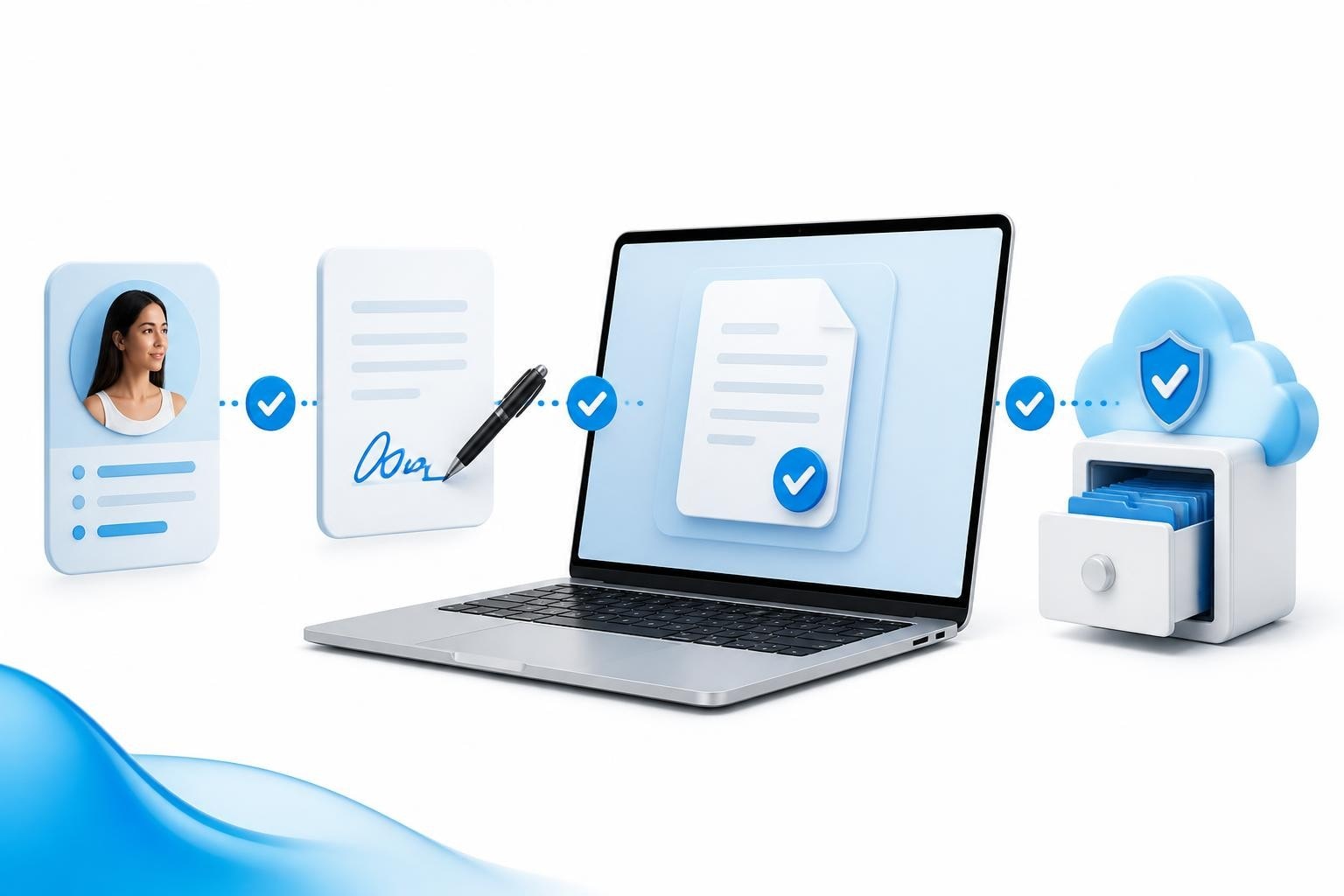
When you're managing fifteen or more creator models, manual paperwork kills momentum. A drawn signature provides the legal validity of traditional handwritten signatures while cutting contract turnaround from days to minutes. For creator agencies handling onboarding, compliance documents, and payroll agreements, digital drawn signatures eliminate bottlenecks, reduce administrative overhead, and create audit trails that protect both agency and talent.
Why Creator Agencies Need Digital Drawn Signatures
Traditional wet-ink signatures create operational chaos at scale. You're juggling model contracts, compliance forms, release agreements, and payment authorizations across multiple time zones and jurisdictions. Waiting for postal delivery or coordinating in-person signings slows onboarding, delays revenue, and increases the risk of incomplete documentation.
A drawn signature captures the natural motion of handwriting through digital input, whether from a touchscreen, stylus, or mouse. Unlike typed names or checkbox clicks, drawn signatures feel familiar to signers while offering technical advantages that handwritten, electronic, and digital signatures each provide in different contexts.
Legal Validity Across Jurisdictions
The core question: will your contracts hold up? The answer is yes, provided you implement them correctly. Electronic signatures are legally binding in the United States, European Union, United Kingdom, and most developed markets where creator agencies operate.
Key legal requirements include:
- Intent to sign: The signer must understand they're executing a binding agreement
- Consent to electronic process: Both parties agree to digital execution
- Association with the record: The signature must be linked to the specific document
- Record retention: You must store signed documents with metadata intact
For creator agencies, this means your onboarding system needs to capture not just the signature but also timestamps, IP addresses, and consent acknowledgments. When compliance audits happen or contract disputes arise, these metadata points prove authenticity.

Implementing Drawn Signatures in Your Onboarding Workflow
Your onboarding process determines how quickly new models start generating revenue. Drawn signatures accelerate this timeline when integrated properly.
Step-by-Step Integration
Digital document preparation: Convert your standard contracts, release forms, and compliance documents to fillable PDFs or web forms. Include signature fields at execution points.
Multi-device compatibility: Models sign from phones, tablets, or computers. Your signature capture must work across all platforms without requiring app downloads.
Guided signing flow: Present documents in sequence with clear instructions. Highlight signature fields and required initials. Prevent submission until all required fields are complete.
Immediate verification: Send signed copies to both model and agency instantly. No waiting for scans or photos of physical documents.
Automated storage: Route completed documents to compliance management systems with proper categorization and search capability.
When models can complete onboarding from their phones in fifteen minutes instead of scheduling office visits or mailing documents, you eliminate drop-off and start revenue generation faster.
| Traditional Process | Drawn Signature Process | Time Saved |
|---|---|---|
| Mail contract | Email contract link | 3-5 days |
| Sign and return | Sign on device | 2-4 days |
| Manual filing | Auto-archived | 1 day |
| Total | Total | 6-10 days |
Security and Fraud Prevention
At scale, you'll encounter bad actors. Forged signatures, disputed contracts, and compliance gaps create legal exposure. Drawn signatures offer security advantages over scanned or photographed signatures when implemented with proper controls.
Authentication Layers
Signer verification happens before document access. Email verification, SMS codes, or ID checks confirm the person signing is who they claim to be. Best practices for electronic signatures emphasize multi-factor authentication for high-value agreements.
Biometric data captured during drawn signatures includes pressure patterns, speed, and stroke order. While not foolproof, this data makes forgery significantly harder than copying a scanned signature image. Research on offline handwritten signature verification demonstrates how these patterns serve as unique identifiers.
Tamper-evident sealing locks documents after signing. Any modification invalidates the signature, providing immediate evidence of post-execution changes.
For creator agencies managing compliance requirements, these security layers protect against disputed terms, altered payment schedules, and fabricated consent documentation.
Comparison: Signature Type Security
| Signature Type | Forgery Difficulty | Verification Method | Recommended Use |
|---|---|---|---|
| Scanned image | Low | Visual comparison | Low-risk documents |
| Typed name | Very low | None | Internal acknowledgments |
| Drawn signature | Medium-high | Biometric + metadata | Contracts, compliance |
| Cryptographic digital | Very high | Certificate chain | High-value agreements |
The drawn signature occupies the sweet spot: harder to forge than simple typed names, easier to execute than cryptographic certificates, and familiar enough that models complete signing without confusion.

Platform Selection and Integration
Not all signature tools fit agency workflows. When evaluating platforms, prioritize these capabilities:
- API access: Integration with your existing agency management software eliminates manual document routing
- Template management: Reusable contract templates speed up repetitive signing processes
- Bulk sending: Onboard multiple models simultaneously without individual document preparation
- Mobile optimization: Models complete documents from phones without desktop requirements
- Compliance reporting: Generate audit reports showing who signed what and when
Some agencies build signature capture directly into their operating systems rather than relying on third-party tools. This approach provides tighter workflow integration and eliminates per-signature fees at high volumes.
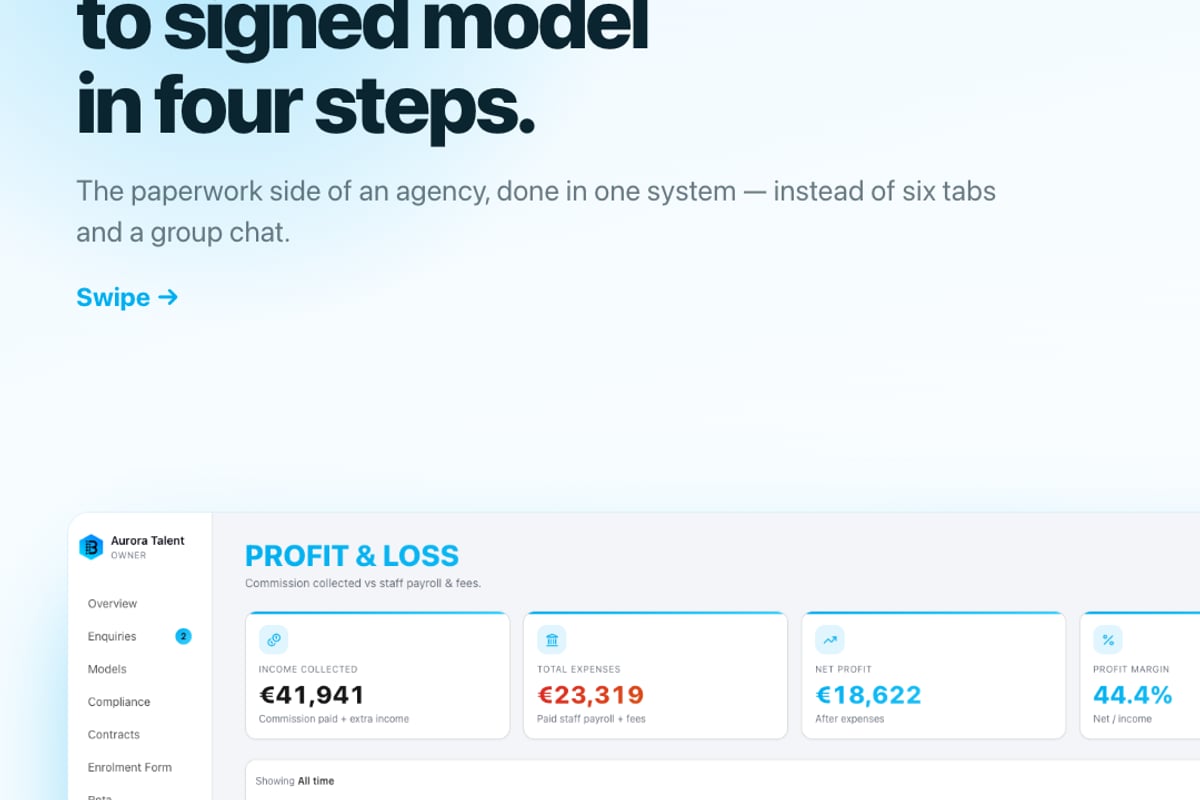
BIGROS includes contract management and signature capture as native features, allowing agencies to send onboarding documents, track completion status, and store signed agreements alongside model profiles and payment records. When your Creator Agency Operating System handles signatures in the same platform managing leads, payroll, and compliance, you eliminate data silos and reduce administrative overhead.
Cost Structure Analysis
Pricing models vary significantly:
- Per-signature: Common for low-volume users but expensive at scale
- Monthly user seats: Fixed cost regardless of signature volume
- Platform fee: Flat monthly or annual rate with unlimited signatures
- Custom enterprise: Negotiated pricing for high-volume agencies
When you're processing twenty to fifty contracts monthly during growth phases, per-signature pricing becomes prohibitive. Calculate your twelve-month signature volume and compare total costs across pricing models.
Appearance and Consistency Considerations
The drawn signature debate often focuses on aesthetics. Does it need to be in cursive? Should it match the model's legal name exactly? Signatures don't require cursive to be valid, and signature appearance matters less than intent and consistency.
Practical Guidelines
Allow flexibility: Some models prefer stylized signatures, others print their names, some use initials. All are legally valid if executed with intent to authenticate.
Encourage consistency: While not legally required, consistent signatures across documents simplify verification and reduce confusion during audits.
Don't reject based on appearance: Legal validity comes from intent and process, not whether the signature looks "professional" or matches a specific style.
Store comparison samples: Keep early signed documents as reference points if signature verification becomes necessary later.
For creator agencies, the focus should be on speed and completion rather than signature aesthetics. The faster models complete onboarding, the faster they generate revenue.
Compliance Documentation and Audit Trails
Regulatory scrutiny in the creator economy demands meticulous record-keeping. Drawn signatures create digital audit trails that surpass physical documentation.
Required Metadata
Every signed document should capture:
- Timestamp: Exact date and time of signature execution
- IP address: Geographic location and network information
- Device information: Browser, operating system, screen size
- Email address: Verified contact for the signer
- Document version: Hash or version number of the signed document
- Consent acknowledgments: Checkbox confirmations or verbal consent records
This metadata proves the document was signed by a specific person at a specific time under specific conditions. When compliance audits or legal disputes arise, you can demonstrate the signature's authenticity beyond reasonable doubt.

Managing Signature Workflows at Scale
Once you're managing thirty or more models, individual document handling becomes unsustainable. Automation separates struggling agencies from profitable operations.
Automated Document Routing
Trigger-based sending: When a new model reaches a specific onboarding stage, automatically send the next required contract or form.
Reminder sequences: If documents remain unsigned after 24 hours, send automatic reminders. Escalate to staff notifications after 48-72 hours.
Conditional logic: Route different documents based on model type, jurisdiction, or service agreement structure.
Team notifications: Alert relevant staff when critical documents are signed, such as management contracts or exclusive representation agreements.
Your agency operating system should handle these workflows without manual intervention. The goal: models move from initial contact to fully onboarded with minimal staff touches.
Integration with Payment and Compliance Systems
Signed contracts unlock payment processing and content publication. Drawn signatures should trigger downstream actions automatically.
Connected Workflows
When a model signs their service agreement:
- Compliance status updates: Mark the model as contract-complete in your compliance tracking
- Payment setup: Trigger payout configuration and tax form distribution
- System access: Provision accounts in content management and communication platforms
- Team assignments: Notify assigned managers and chatters that the model is ready for active management
Similarly, signed invoices should trigger payment processing, and signed content releases should enable publication permissions.
Breaking these connections creates gaps where models are contract-complete but not operationally active, or where content goes live without proper release documentation.
Common Implementation Mistakes
Agencies transitioning to drawn signatures encounter predictable problems:
Mixing signature methods: Using drawn signatures for some documents but physical signatures for others creates confusion and incomplete digital records. Commit fully to digital processes.
Inadequate mobile optimization: If forms don't render properly on phones, models abandon the process. Test every template on multiple devices.
Poor document organization: Signed documents scattered across email, cloud storage, and local drives defeat the purpose of digital workflows. Centralize storage with searchable metadata.
Skipping verification steps: Accepting signatures without identity verification invites fraud and creates compliance gaps. Implement at minimum email verification for all signers.
No staff training: Team members unfamiliar with the system revert to manual processes. Invest time in training your administrative staff on signature workflows.
Frequently Asked Questions
Can models refuse to use drawn signatures and insist on physical contracts?
Yes, but you're not required to accommodate this preference. If your standard process uses electronic signatures and you've disclosed this during initial conversations, models can choose to work with you under those terms or seek representation elsewhere. Most models prefer the speed and convenience of digital signing once they understand the process.
What happens if a model claims they never signed a document?
Your audit trail demonstrates whether the signature occurred. Timestamps, IP addresses, email verification, and device data provide evidence of who signed and when. Store these records alongside the signed document. If disputes escalate to legal proceedings, this metadata typically satisfies evidentiary requirements for contract signature validation.
Do we need different signature processes for different jurisdictions?
Most developed markets recognize electronic signatures under similar frameworks, but specific requirements vary. For models in the EU, ensure GDPR compliance for data collection during signing. For US models, ESIGN and UETA provide the legal foundation. Consult legal counsel if operating in jurisdictions with unclear electronic signature laws, but for typical creator agency markets, standard implementation suffices.
Document Templates and Standardization
Consistency across contracts reduces legal risk and accelerates signing. Develop template libraries for:
- Initial service agreements
- Revenue share modifications
- Exclusive representation contracts
- Content release forms
- Model release updates
- Payment authorization changes
Each template should include:
- Standard legal language: Reviewed by qualified counsel
- Variable fields: Model name, dates, rates, and custom terms
- Signature fields: Positioned consistently across all documents
- Initial boxes: For specific terms requiring extra acknowledgment
When templates are standardized, models become familiar with your documentation style, reducing questions and completion time.
Staff Training and Process Documentation
Your team needs clear procedures for handling signature workflows:
Training Checklist
- How to send documents for signature
- When to use which template
- How to track pending signatures
- What to do when signatures are incomplete after 72 hours
- How to verify signature completion
- Where signed documents are stored
- How to retrieve documents for compliance checks or model requests
Document these processes in your operations manual. When new staff join or existing staff handle unfamiliar situations, written procedures prevent errors and maintain consistency.
Performance Metrics and Optimization
Track signature workflow performance to identify bottlenecks:
- Average time from send to signature: Should trend under 24 hours for standard contracts
- Completion rate: Percentage of sent documents that get signed
- Abandonment points: Where models drop out of multi-document sequences
- Device usage: Mobile vs. desktop completion rates
- Error rates: How often technical problems prevent signing
When completion rates drop, investigate root causes. Common issues include unclear instructions, mobile rendering problems, or excessive document length.
Drawn signatures transform creator agency operations from paper-based chaos into streamlined digital workflows. By implementing secure signature capture with proper verification, metadata retention, and system integration, you'll onboard models faster, maintain cleaner compliance records, and scale past twenty models without proportional administrative growth. BIGROS handles signatures, contracts, compliance tracking, and every other operational requirement in one unified platform built specifically for creator agencies.