
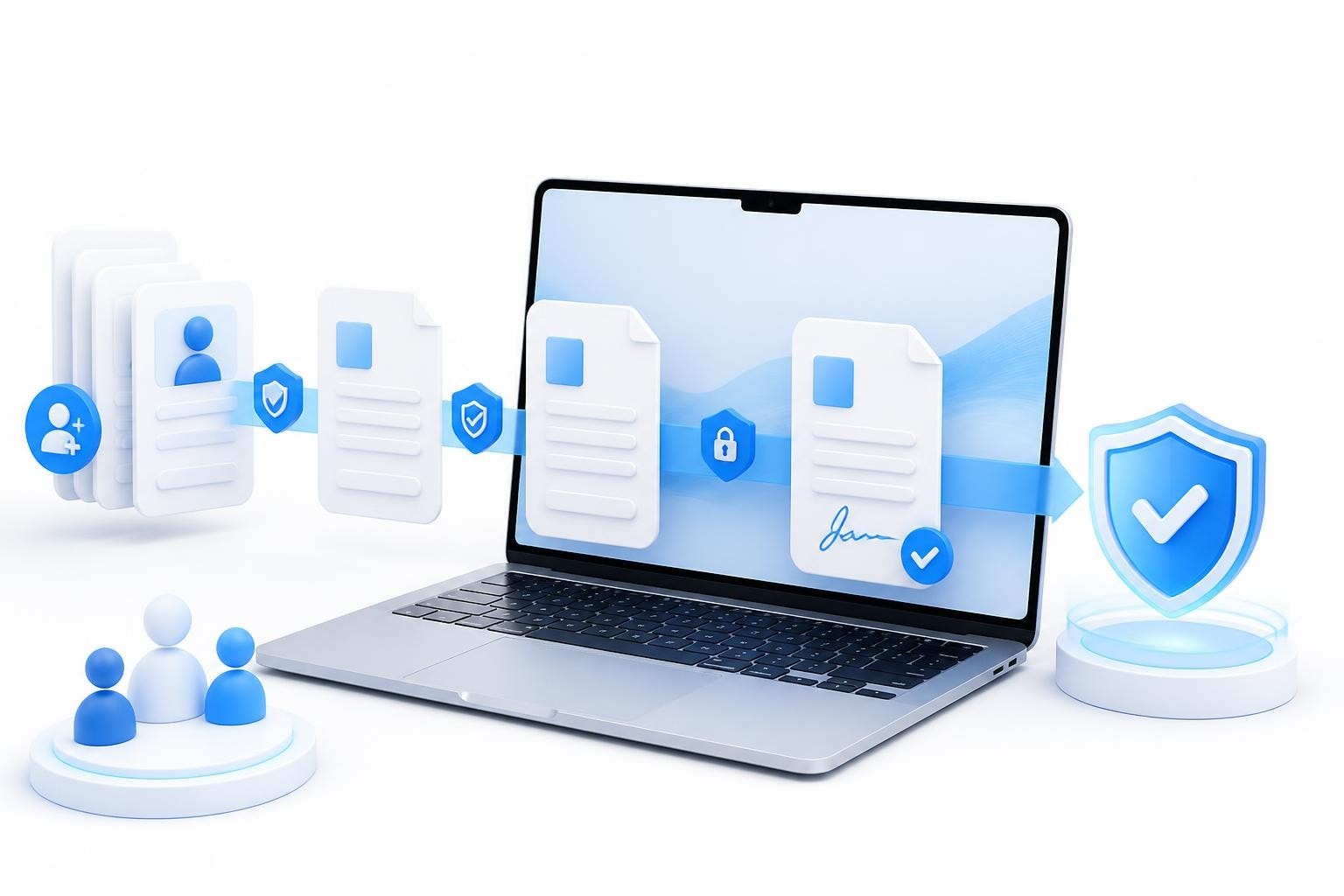
Running a creator agency means juggling multiple model contracts, compliance documents, and legal agreements every single week. A sign portal eliminates the paperwork bottleneck that slows down onboarding and creates compliance gaps as you scale. This digital signature solution allows agencies to send, track, and store signed documents in one centralized system, cutting onboarding time from days to hours while maintaining audit-ready records.
Why Creator Agencies Need a Sign Portal
Traditional contract signing creates operational chaos. You're emailing PDFs, chasing signatures, manually filing documents, and hoping nothing falls through the cracks. When you're managing 15-20 models, this manual approach becomes unsustainable. Revenue delays pile up, compliance risks multiply, and your team wastes hours on administrative tasks instead of growing your roster.
A sign portal automates the entire signature workflow. Models receive contracts instantly, sign from any device, and the system stores everything with timestamp verification. Your agency maintains a complete audit trail without filing cabinets or scattered email threads.
Speed and Scale Benefits
The time savings compound rapidly. One model contract might take 3-5 days through traditional methods. Email back-and-forth, printing, scanning, manual follow-ups. A sign portal reduces this to 30 minutes or less. Models sign immediately on their phone, documents auto-file to their profile, and you move straight to revenue-generating activities.

When scaling past 20 models, this efficiency becomes critical. You might onboard 5-10 new models monthly. Without automation, contract management alone requires dedicated staff time. The sign portal handles the heavy lifting while your team focuses on talent development and content strategy.
Essential Sign Portal Features for Creator Agencies
Not every electronic signature solution fits agency operations. You need specific capabilities that address creator business requirements. Understanding these features helps you evaluate options and avoid platforms built for different industries.
Compliance and Legal Validity
Your sign portal must meet global legal standards for electronic signatures. Look for platforms that comply with ESIGN Act requirements in the United States and eIDAS regulations in Europe. The secure electronic signature solution you choose should offer tamper verification and legal defensibility across jurisdictions where your models operate.
Audit trails are non-negotiable. Every signature needs timestamping, IP address logging, and identity verification. If a compliance issue arises, you need ironclad proof of who signed what and when. This documentation protects both your agency and your models.
Template Management and Customization
Creator agencies use standardized contracts with model-specific variables. Revenue splits, content requirements, exclusivity clauses-these details change per model while the core agreement stays consistent. Your sign portal should support:
- Pre-built contract templates with merge fields
- Variable insertion for custom terms
- Version control for contract updates
- Multi-document packet assembly
- Conditional logic for different model tiers
This templating capability eliminates recreating contracts from scratch. You build once, deploy hundreds of times with personalized details auto-populated from your model database.
Integration with Agency Operations
Standalone tools create data silos. Your sign portal needs to connect with your broader operating system. When evaluating best e-signature software options, prioritize platforms offering robust API access and pre-built integrations.
The ideal workflow sends contracts directly from your agency management software, captures signatures, and returns completed documents to the model's profile automatically. No manual downloading, uploading, or cross-referencing between systems.
BIGROS streamlines the entire creator agency workflow by connecting contract management with model onboarding, compliance tracking, and payment processing in one unified platform. The Creator Agency Operating System handles document automation alongside every other operational requirement, eliminating the tool sprawl that slows agencies down.
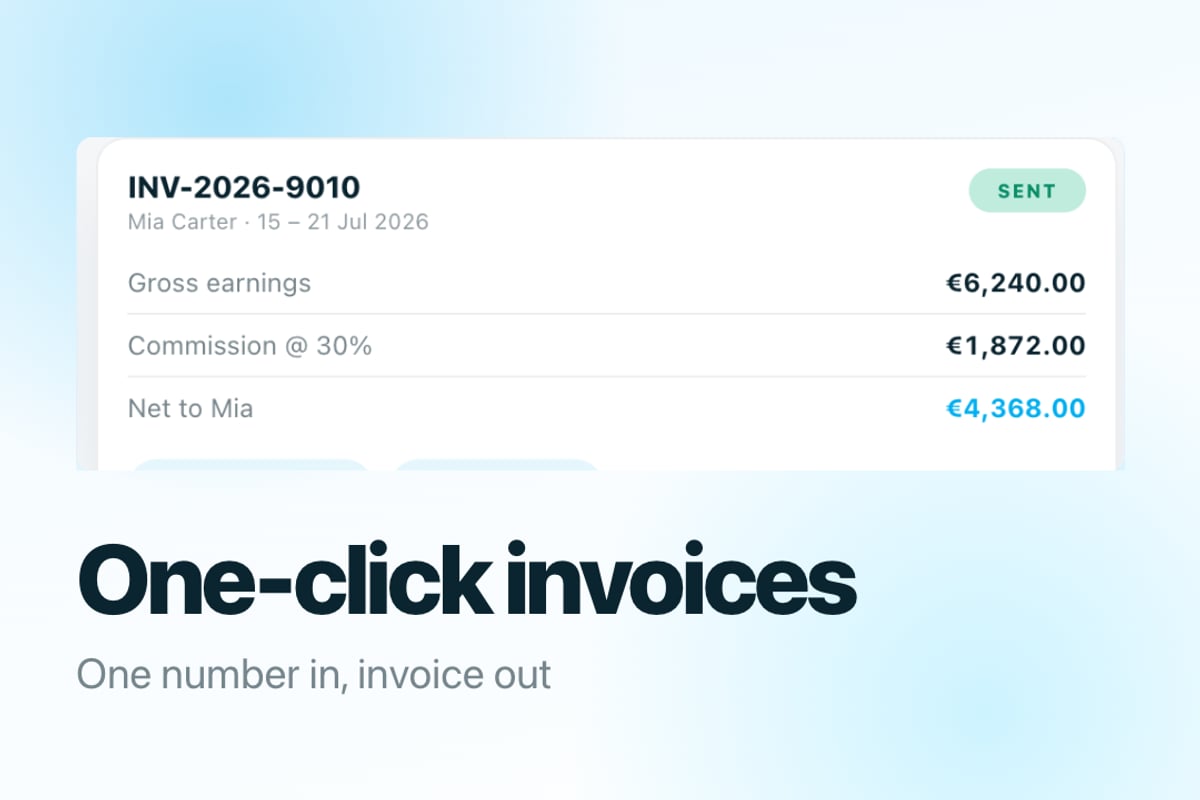
Building Your Sign Portal Workflow
Implementation determines whether a sign portal delivers value or creates new headaches. Strategic deployment transforms this tool into a competitive advantage. Follow these steps to build a contract workflow that scales with your roster.
Step 1: Document Inventory and Standardization
Start by cataloging every document requiring signatures in your agency:
- Model management agreements
- Content rights and licensing contracts
- Non-disclosure agreements
- Payment authorization forms
- Tax documentation (W-9, W-8BEN)
- Photo ID verification
- Age verification compliance
Review each document for consistency. Models spot unprofessional variations in contract language, formatting errors, or outdated terms. Standardize everything before uploading to your sign portal. This preparation work prevents future confusion and reduces legal risk.
| Document Type | Signature Required | Storage Period | Compliance Level |
|---|---|---|---|
| Management Agreement | Model + Agency | Indefinite | Critical |
| NDA | Model | Indefinite | High |
| Payment Authorization | Model | 7 years | Critical |
| Tax Forms | Model | 7 years | Critical |
| ID Verification | Model | Contract duration + 2 years | Critical |
Step 2: Template Creation and Testing
Convert standardized documents into sign portal templates. Map merge fields to data you already collect during model intake. Name, address, payment details, revenue split percentage-these variables should auto-populate from your model onboarding form.
Test every template thoroughly. Send test contracts to team members using different devices and email providers. Verify the signing experience works smoothly on mobile, tablet, and desktop. One broken link or confusing instruction delays onboarding and frustrates models.
Step 3: Onboarding Integration
Connect signature requests to your model onboarding sequence. The optimal flow triggers contracts immediately after a model completes their initial application and passes preliminary screening. This maintains momentum and prevents drop-off.
Consider the timing and sequence:
- Send all required documents in one packet versus staged delivery
- Allow partial completion and resumption
- Set expiration dates for pending signatures
- Configure automated reminders at 24 and 48 hours
- Define escalation protocols for unsigned contracts after 72 hours
Your onboarding workflow should guide models through signatures as part of a seamless welcome experience, not a bureaucratic obstacle course.
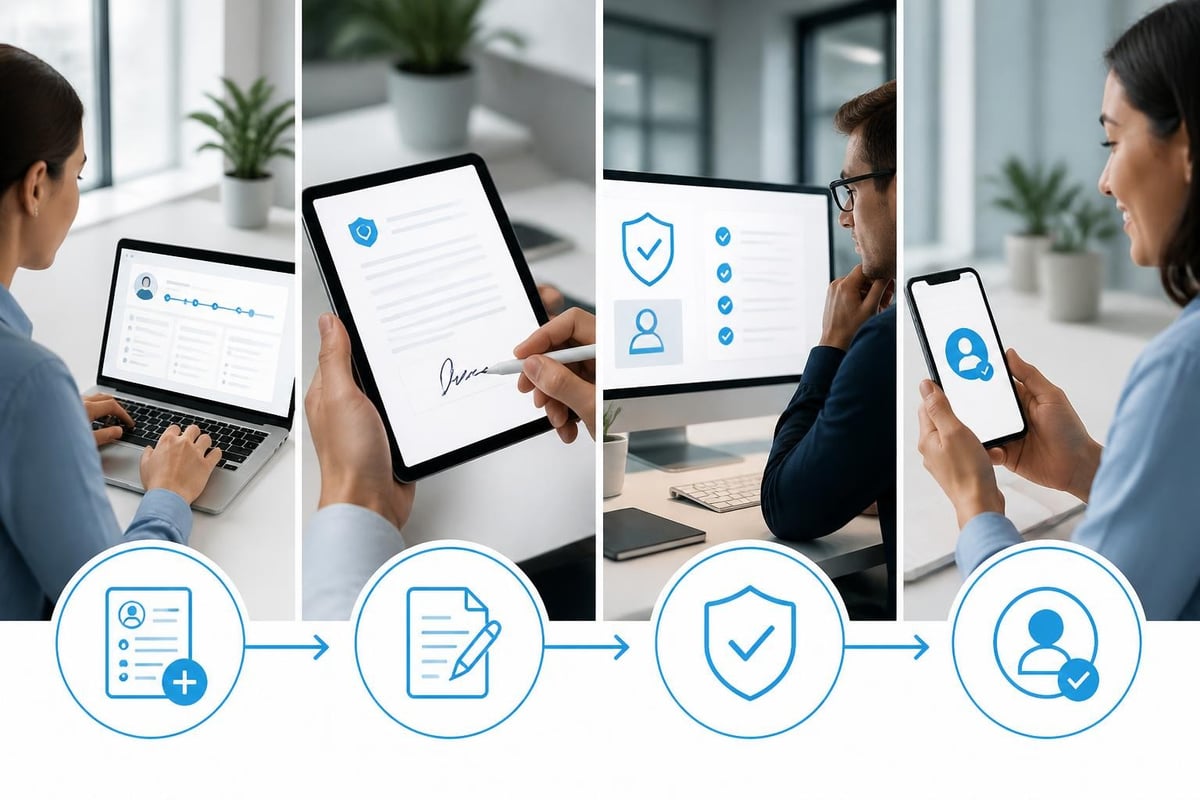
Advanced Sign Portal Strategies
Basic signature collection represents just the starting point. Sophisticated agencies leverage their sign portal for competitive advantages beyond simple document execution.
Conditional Contract Logic
Different model tiers require different agreement terms. Exclusive representation commands higher revenue splits but includes non-compete clauses. Part-time models receive standard agreements with modified content commitments. Build conditional templates that present the right contract based on model classification.
This automation prevents errors from manually editing agreements. The system ensures every exclusive model sees exclusivity terms, every international model receives appropriate tax forms, and every contract matches your discussed verbal terms.
Bulk Operations for Portfolio Updates
Contract amendments happen. Revenue split adjustments, updated compliance requirements, policy changes-you need every active model to review and sign updated terms. Your sign portal should support bulk sending to filtered model segments.
Create a model list, attach the amendment document, send to all with one click. Track completion status, identify holdouts, and maintain version control showing who operates under which agreement version at any time.
Compliance Documentation Packages
Creator agency compliance extends beyond the management contract. Age verification, identity confirmation, content rights, platform terms acknowledgment-these documents require regular updates and re-verification.
Bundle compliance documents into scheduled signature requests. Every 12 months, the system automatically sends the full compliance packet to each model, tracks completion, and flags any gaps in your compliance coverage.
Measuring Sign Portal Impact
Track specific metrics to quantify the value your sign portal delivers and identify improvement opportunities.
Time-to-Revenue Metrics
Measure the elapsed time between initial model contact and first revenue-generating content. The sign portal reduces the contract bottleneck portion of this timeline. Pre-implementation versus post-implementation comparison shows concrete time savings.
Calculate hourly staff cost saved by automating contract distribution, follow-up, and filing. If signature automation saves 2 hours per model and you onboard 8 models monthly, that's 16 hours-potentially a part-time salary-redirected to high-value activities.
Compliance Coverage Rates
Audit your model roster for signature completeness. What percentage have every required document fully executed? Where do gaps exist? The sign portal's reporting dashboard should surface these issues instantly rather than requiring manual file review.
Target 100% compliance coverage with zero models operating without complete, current documentation. Your sign portal makes this achievable through automated reminders and clear visibility into pending signatures.
Model Experience Feedback
Survey new models about their onboarding experience. Ask specifically about the contract signing process. Was it clear? Did they encounter technical issues? How long did completion take? Positive feedback indicates your sign portal enhances professionalism while negative responses signal implementation problems.
Top-performing agencies use comprehensive management software that integrates signatures with every other touchpoint, creating a cohesive experience that impresses models from first contact.
Choosing the Right Sign Portal Platform
The electronic signature market offers dozens of solutions at varying price points and capability levels. Creator agencies have specific needs that general business tools may not address adequately.
Evaluation Criteria
Compare platforms across these dimensions:
Security and Compliance
- Legal validity in your operating jurisdictions
- Audit trail completeness and tamper-proofing
- Data encryption standards
- Access controls and permission management
Usability
- Mobile signing experience quality
- Template creation complexity
- Signing process steps and clarity
- Multi-language support for international models
Integration Capability
- API documentation and functionality
- Pre-built connectors to popular platforms
- Webhook support for real-time updates
- Data export formats and flexibility
Pricing Structure
- Per-envelope versus unlimited models
- Monthly versus annual commitments
- Overage charges and surprise fees
- Storage limits and archival costs
Several platforms like SignWell and Fill's esign app offer business-grade features trusted by thousands of companies, providing strong foundations for agency operations.
Build Versus Buy Considerations
Some agencies consider building proprietary signature solutions. This approach rarely makes financial sense. Development costs, ongoing maintenance, legal liability for signature validity, and compliance updates quickly exceed commercial platform subscriptions.
Focus your development resources on agency-specific competitive advantages. Use proven sign portal technology for document execution while building unique value in model development, content strategy, and revenue optimization.
Common Sign Portal Implementation Mistakes
Learning from other agencies' errors accelerates your deployment and prevents costly setbacks.
Incomplete Training and Documentation
Your team needs clear procedures for every signature scenario. What happens when a model reports not receiving the contract email? How do you handle partial completions? Who has permission to void and resend documents? Document these workflows before problems arise.
Create internal guides, record training videos, and maintain a troubleshooting reference. Your OnlyFans agency operations run smoother when every team member confidently handles signature issues.
Over-Complicating the Signing Process
Some agencies add unnecessary steps that frustrate models. Multiple authentication factors, excessive form fields, confusing instructions-each friction point increases abandonment. Keep signing as simple as legally permissible.
The ideal model experience: receive email, click link, review document, tap signature button, done. Anything beyond this requires strong justification.
Neglecting Mobile Optimization
Most models will sign contracts on their phones. If your documents don't render properly on mobile screens or the signing interface requires desktop functionality, you've created an onboarding barrier. Test every template on actual mobile devices before deployment.
Frequently Asked Questions
How legally binding are sign portal signatures compared to wet signatures?
Electronic signatures carry the same legal weight as traditional signatures under the ESIGN Act and similar international laws, provided the platform meets compliance standards. Your sign portal must include proper identity verification, audit trails, and consent to electronic signing. Courts consistently uphold properly executed electronic signatures.
Can models review contracts before signing through the portal?
Yes, and they should. Best practice separates contract delivery from signature requests by 24-48 hours. Send the agreement for review, then trigger the signature request after the model has time to read and ask questions. This approach demonstrates good faith and reduces disputes.
What happens if a model claims they never signed a contract?
This is precisely why audit trails matter. Your sign portal records the IP address, timestamp, device information, and authentication method used during signing. This evidence typically resolves disputes immediately. Additionally, most platforms send confirmation emails to both parties with the signed document attached, creating multiple proof points.
Should agencies require witnesses or notarization through the sign portal?
Standard model management agreements rarely require witnesses or notarization. These additions complicate the process without providing meaningful legal protection for typical creator agency contracts. Consult your attorney about specific high-value or unusual agreement types that might warrant additional verification.
Sign Portal Security Considerations
Document security extends beyond signature validity. Your sign portal stores sensitive personal information, financial details, and proprietary business terms. Implement security practices that protect both agency and model interests.
Use platforms offering document-level access controls. Not every team member needs visibility into every model's contract. Limit access based on roles: chatters shouldn't see financial terms, while accountants need payment authorization access but not content strategy details.
Enable two-factor authentication for all portal accounts. Require strong passwords and regular credential rotation. Monitor login activity for unusual patterns that might indicate unauthorized access attempts.
Establish document retention and destruction policies. How long do you maintain signed contracts after a model relationship ends? What's your process for securely deleting documents? Clear policies prevent compliance issues and reduce storage costs as your agency scales.

Integration with Broader Agency Systems
Your sign portal shouldn't exist in isolation. Maximum value comes from connecting signatures with every other operational element. When a model signs their management agreement, that action should trigger multiple downstream processes automatically.
Payment system provisioning begins after contract execution. The signed revenue split terms automatically configure payout calculations. Compliance status updates to show contract completion. The model's dashboard activates, granting access to content calendars and communication tools. This orchestration eliminates manual handoffs and reduces onboarding delays.
Consider how agency software solutions handle these integrations. Purpose-built platforms offer pre-configured workflows that general business tools can't match. The difference between generic signature platforms and creator-focused systems becomes most apparent in these integration scenarios.
Track signature completion as a key onboarding milestone. Your agency CRM should reflect contract status, send automated follow-ups for pending signatures, and alert relationship managers when contracts expire or require renewal.
Scaling Contract Operations Past 20 Models
The sign portal you choose at five models should support you at fifty. Evaluate scalability across several dimensions before committing to a platform.
Volume Handling How many signature requests can you send monthly? Do pricing tiers limit active documents or completed signatures? Will you hit usage caps as your roster grows? Build buffer room into your plan selection.
User Management As you expand your team, adding chatters, content managers, and specialized roles, each person needs appropriate system access. Can your sign portal accommodate 10, 20, or 50 user accounts without exponential cost increases?
Template Proliferation Five models might use one contract template. Fifty models across multiple niches, experience levels, and geographic regions require template variations. Your platform should organize, version-control, and manage dozens of template variations without becoming unwieldy.
Agencies running comprehensive creator operations benefit from unified platforms where signatures integrate with model management, compliance tracking, and financial systems rather than stitching together disconnected point solutions.
A well-implemented sign portal transforms contract management from an administrative burden into a competitive advantage, enabling faster onboarding and bulletproof compliance at scale. BIGROS brings together contract automation, model management, compliance tracking, and financial operations in one creator-focused operating system-schedule a demo at BIGROS to see how agencies are eliminating operational bottlenecks and scaling past 50 models with confidence.