

Every creator agency operator knows that the moment a model decides to join your roster is critical. The experience they encounter in sign up determines whether you convert interest into active partnerships or lose talent to friction and complexity. For OFM agencies managing multiple creators, this process must balance speed, compliance requirements, legal safeguards, and user experience. A poorly designed sign-up flow creates bottlenecks, raises dropout rates, and exposes your agency to compliance risks. This article explores the essential elements of effective sign-up processes specifically designed for creator agency operations.
Understanding the Sign-Up Journey in Creator Agencies
The creator sign-up process differs fundamentally from standard SaaS onboarding. You're not simply collecting email addresses. You're initiating a business relationship that involves income sharing, content rights, identity verification, and regulatory compliance.
Your sign-up flow must accomplish several objectives simultaneously. It needs to capture essential information for contracts and payroll, verify identity to meet platform requirements, establish clear terms for revenue sharing, and create a smooth experience that reflects your agency's professionalism.
Most agencies lose 30-40% of interested creators during sign-up because the process feels overwhelming or disorganized. The models who make it through often arrive confused about next steps, creating additional work for your onboarding team.
Key Stages in the Creator Sign-Up Process
Breaking down the journey helps identify where optimization matters most:
- Initial interest capture - Name, contact information, and basic qualifying questions
- Identity verification - Age verification, government ID, and platform compliance checks
- Contract presentation - Terms, commission structure, and legal agreements
- Payment setup - Banking details, tax information, and payout preferences
- Account activation - Platform access, team assignments, and first steps
Each stage presents opportunities for dropout. Research on sign-up form best practices emphasizes minimizing fields and clarifying purpose at every step.

Designing High-Converting Sign-Up Forms
The technical implementation of your sign-up interface directly impacts conversion rates. Forms that appear in sign up processes need careful attention to field selection, validation, and user guidance.
Essential Fields vs. Nice-to-Have Information
Start with the minimum viable data set:
- Full legal name (required for contracts and payments)
- Email address (primary communication channel)
- Phone number (verification and urgent contact)
- Date of birth (compliance requirement)
- Current platform usernames (if applicable)
Avoid requesting information you can collect later. Social media follower counts, content preferences, and availability can wait until after the creator commits. Every additional field in sign up creates friction.
Many agencies make the mistake of front-loading their intake questionnaire. A 20-field form during initial sign-up kills conversion. Split information gathering across multiple stages aligned with trust-building.
Mobile Optimization Requirements
Most creators will complete your sign-up process on mobile devices. Your forms must function flawlessly on small screens with touch interfaces.
| Mobile Optimization Element | Implementation Standard |
|---|---|
| Input field size | Minimum 44x44 pixels for touch targets |
| Keyboard type | Appropriate for each field (email, numeric, etc.) |
| Autofill support | Enable browser autofill for name, email, phone |
| Error messaging | Inline validation with clear correction guidance |
| Progress indicators | Visual confirmation of multi-step completion |
The best practices for mobile sign-up forms highlight the importance of single-column layouts and generous spacing between interactive elements.
Security and Compliance in Creator Sign-Up
OFM agencies operate in a regulated environment. Your sign-up process must establish compliance from the first interaction while maintaining a professional creator experience.
Age Verification Integration
Age verification cannot be an afterthought. Platform terms of service and legal requirements mandate strict age confirmation before any creator begins producing content.
Integrate automated verification tools directly into your sign-up flow. Third-party services can verify government-issued IDs and cross-reference databases within seconds. This removes manual review bottlenecks while providing audit trails for compliance documentation.
Position age verification early in sign up but after initial interest capture. You want to qualify serious applicants before asking for sensitive documents, but you cannot proceed to contracts without verified age confirmation.
Data Protection and Privacy Standards
Every piece of information collected in sign up creates data protection obligations. Models trust you with identity documents, banking information, and personal details.
Implement these security measures as baseline requirements:
- SSL encryption for all data transmission during sign-up
- Secure storage with encryption at rest for sensitive documents
- Access controls limiting staff visibility to necessary information
- Retention policies that delete unneeded data after defined periods
- Privacy notices clearly explaining data usage and storage
The security vulnerabilities in account creation research identifies pre-hijacked accounts and session management as critical risk areas requiring attention in sign-up implementation.

Streamlining Contract Acceptance During Sign-Up
Legal agreements represent the most complex element appearing in sign up flows for creator agencies. You need enforceable contracts without creating analysis paralysis.
Presenting Terms Clearly
Your management agreement covers commission rates, exclusivity terms, content rights, termination conditions, and dispute resolution. This document protects both parties but can overwhelm creators if presented poorly.
Break contract presentation into digestible sections. Use progressive disclosure to show overview summaries with the option to expand full legal language. Highlight the key terms that creators care about most: commission percentage, payment timing, and contract duration.
When discussing how to onboard OnlyFans models, contract clarity emerges as a consistent friction point. Creators often abandon sign-up when faced with dense legal text without guidance.
Electronic Signature Implementation
Manual printing, signing, and scanning creates unnecessary delay in sign up completion. Electronic signature platforms provide legally binding agreements with full audit trails.
Choose e-signature tools that support:
- Mobile-friendly signing interfaces
- Multi-party signature collection (for agency and creator)
- Automatic completion triggers for next workflow steps
- Secure document storage with retrieval access
- Compliance with ESIGN Act and UETA standards
Store signed contracts within your agency management system where staff can reference terms without requesting copies from creators. This becomes essential as your roster scales past 15-20 models.
Payment Information Collection Best Practices
Banking details and tax information appear in sign up processes but require special handling due to sensitivity and accuracy requirements.
Timing Payment Setup Appropriately
Never request full banking information before a creator signs your management agreement. The sequence matters for both security and conversion optimization.
The optimal flow positions payment collection immediately after contract acceptance. The creator has committed to the partnership and understands the commission structure. Now they're motivated to complete payout setup to start earning.
Separate tax documentation from initial payment setup. W-9 forms (for US creators) or international tax documents can be collected after the first payout threshold is reached. This reduces initial complexity while maintaining compliance before disbursement deadlines.
Validation and Error Prevention
Payment information errors create massive operational headaches. Failed transfers, delayed payments, and manual correction requests consume administrative resources while frustrating creators.
Build validation directly into your payment collection interface:
- Verify routing numbers against bank databases in real-time
- Confirm account number formats match banking institution standards
- Require re-entry of account numbers to catch typos
- Provide clear visual confirmation of entered information
- Send test micro-deposits before processing first real payout
Understanding how to pay OnlyFans creators efficiently starts with accurate payment information captured during sign-up.
Progressive Disclosure and Multi-Step Forms
The most effective sign-up implementations break the process into logical stages that match the creator's mental model of joining an agency.
Designing Step-by-Step Progression
Single-page forms work for simple email collection but fail for comprehensive creator onboarding. Multi-step flows improve completion rates by reducing cognitive load and creating momentum.
Structure your steps around natural decision points:
Step 1: Basic Information (30 seconds)
- Name and contact details
- Current platform presence (if any)
- Brief qualifying questions
Step 2: Verification (2-3 minutes)
- Age verification upload
- Identity document review
- Automated approval or manual queue
Step 3: Agreement (5-7 minutes)
- Contract review and questions
- Electronic signature
- Terms confirmation
Step 4: Payment Setup (3-4 minutes)
- Banking information entry
- Payout preferences
- Validation confirmation
Step 5: Account Creation (1 minute)
- Platform access credentials
- Team introductions
- Next steps overview
Progress Indicators and Encouragement
Visual progress bars reduce abandonment by showing creators how close they are to completion. Each completed step should provide positive reinforcement and clear indication of remaining requirements.
Save partial progress automatically. If a creator abandons sign-up after verification but before contract signing, your system should retain their information and allow resumption from that point. Email reminders to complete sign-up recover 15-20% of abandoned applications.
Integration with Agency Management Systems
Your sign-up process doesn't exist in isolation. Information collected must flow seamlessly into your operational tools for onboarding, compliance tracking, payment processing, and team management.
Automated Workflow Triggers
When a creator completes the final step appearing in sign up, several processes should activate automatically:
- Contract storage in the compliance documentation system
- Calendar scheduling for onboarding call or orientation
- Team member notifications for assigned account manager
- Payment information validation and test deposit initiation
- Content planning template creation for new model
- Welcome email sequence beginning with platform access credentials
Manual handoffs between sign-up completion and operational onboarding create gaps where new creators feel neglected. Automation ensures consistent experience regardless of when sign-up occurs.
For agencies managing creator operations at scale, this integration becomes non-negotiable. When you're managing an OnlyFans chatting team and coordinating multiple models, automated workflows prevent details from falling through cracks.

Single Source of Truth Architecture
Information entered during sign-up becomes the foundation for all future operations. Your system architecture must eliminate data silos that require duplicate entry or manual synchronization.
A creator agency operating system should connect sign-up data directly to:
| System Component | Data Usage from Sign-Up |
|---|---|
| Contract management | Legal name, signature, agreement terms |
| Compliance tracking | ID verification, age confirmation, document storage |
| Payment processing | Banking details, tax information, payout preferences |
| Staff dashboards | Model assignments, contact information, status tracking |
| Content planning | Platform usernames, account access, preferences |
| Communication tools | Email, phone, notification preferences |
When you need to reference OnlyFans agency commission rates or adjust agreements, having accurate sign-up data stored in a unified system prevents discrepancies and disputes.
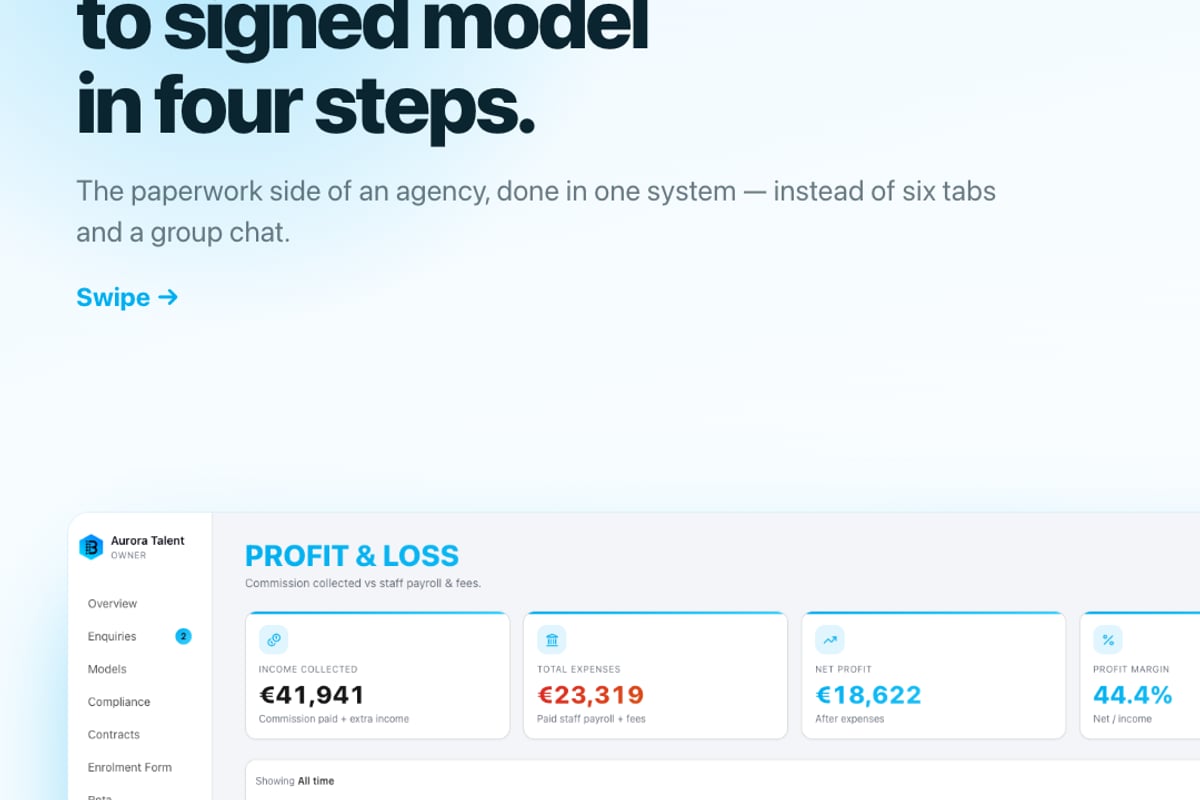
BIGROS delivers exactly this integration, connecting the entire creator journey from initial sign-up through daily operations, compliance management, and financial reporting. Creator Agency Operating System eliminates the fragmented tools that create operational chaos as agencies scale.
Testing and Optimizing Sign-Up Conversion
Even well-designed sign-up processes require continuous refinement based on real creator behavior and conversion data.
Key Metrics to Monitor
Track these indicators to identify optimization opportunities:
- Overall completion rate - Percentage of started sign-ups that reach final activation
- Stage-specific dropout - Where in the process creators abandon
- Time to completion - Average duration from start to finish
- Mobile vs desktop conversion - Device-specific performance differences
- Field-level abandonment - Specific questions triggering exits
- Support ticket volume - Help requests during sign-up indicating confusion
Aim for 60-70% completion rates from started to finished sign-up. Lower rates indicate friction requiring investigation. Higher rates suggest you may not be qualifying creators thoroughly enough.
A/B Testing Strategic Elements
Test variations systematically to improve conversion without compromising compliance or data quality:
- Field order and grouping
- Button text and calls-to-action
- Progress indicator styling and messaging
- Error message clarity and tone
- Contract presentation format
- Payment setup timing within the flow
Change one element at a time and measure impact over sufficient sample sizes. Small agencies may need 2-3 months to gather meaningful data on each variation.
Compliance Documentation and Audit Trails
Regulatory requirements demand proof that proper procedures were followed during creator sign-up. Your system must create comprehensive records automatically.
Essential Audit Elements
Maintain timestamped records of:
- When identity verification was completed and by what method
- IP address and device information from sign-up session
- Contract presentation timestamp and acceptance confirmation
- E-signature metadata including creator authentication
- Data protection notice acknowledgment
- Communication consent and preferences
- Any manual review or approval steps taken
These records protect your agency during platform audits, creator disputes, or regulatory inquiries. Store them securely with appropriate access controls and retention periods.
The OnlyFans agency compliance checklist outlines the documentation standards required for legitimate agency operations.
Social Sign-In vs. Traditional Registration
Some agencies experiment with social login options (Google, Apple, etc.) to reduce friction during sign-up. This approach carries specific trade-offs for creator agencies.
Benefits of Social Authentication
Social sign-in can streamline the initial account creation by pre-filling name and email information. It removes password creation friction and leverages trusted authentication providers.
For the initial interest capture phase, social login works well. Creators can express interest quickly without committing to password management.
Limitations for Agency Requirements
However, social authentication doesn't satisfy your full sign-up requirements. You still need identity verification, contract signing, and payment information that no social provider supplies.
Most agencies find hybrid approaches most effective: Allow social login for the initial inquiry, then transition to comprehensive onboarding that collects all necessary information through traditional form interfaces.
The Okta developer documentation on sign-up flows explains how to balance convenience with security requirements in authentication design.
Post-Sign-Up Activation and Engagement
Completion of the technical sign-up process doesn't mean the creator is truly onboarded. The immediate post-sign-up experience determines whether new models become active revenue generators or ghost accounts.
Immediate Next Steps Communication
Within minutes of sign-up completion, send a comprehensive welcome communication that includes:
- Confirmation of successful registration
- Clear explanation of immediate next steps
- Introduction to assigned account manager or team
- Access credentials for any platforms or tools
- Scheduled orientation or onboarding call details
- Response timeline for questions or support
Avoid the black hole scenario where creators complete sign-up and hear nothing for days. This creates anxiety about whether the process worked and undermines confidence in your agency's professionalism.
First Week Engagement Strategy
Plan specific touchpoints throughout the first week:
- Day 0: Welcome email with next steps
- Day 1: Platform setup guidance and resources
- Day 3: Check-in from account manager
- Day 5: First content planning session
- Day 7: Week one review and questions
This structured approach, similar to user onboarding best practices, prevents new creators from feeling lost during the critical first week.
Frequently Asked Questions
How long should the complete sign-up process take for a new creator?
The technical sign-up flow should be completable in 15-20 minutes for a creator with required documents ready. However, identity verification may add 24-48 hours for manual review if automated systems flag issues. Plan for 2-3 business days from initial interest to full platform access.
Should we collect social security numbers during initial sign-up?
No. SSNs (or international tax identifiers) should be collected before first payout, not during initial registration. This reduces sensitivity during early sign-up and aligns data collection with actual business necessity. Use a separate tax documentation workflow triggered as creators approach payout thresholds.
What's the best way to handle creators who start but don't complete sign-up?
Implement automated reminder emails at 24 hours, 3 days, and 7 days after abandonment. Include a direct link to resume where they left off. Save all partial progress so they don't need to restart. After 14 days, move them to a nurture sequence about agency benefits rather than just completion reminders.
Optimizing the experience that appears in sign up for creator agencies requires balancing speed, compliance, security, and user experience in ways unique to the OFM industry. By implementing structured workflows, automating verification processes, and integrating sign-up data directly into operational systems, agencies convert more interested creators while building the foundation for scalable operations. BIGROS provides the integrated platform to manage sign-up, onboarding, compliance, and ongoing creator operations from a single system, eliminating the fragmented tools that create friction as agencies grow their rosters.