

Managing inbound creator inquiries at scale demands more than spreadsheets and DMs. Portal leads-inquiries that arrive through a dedicated web form or application interface-represent your agency's top-of-funnel opportunity, and how you capture, qualify, and route them determines whether you convert ten models or fifty. For OFM agencies scaling past fifteen to twenty creators, a systematic approach to portal leads separates professional operations from chaotic ones.
Why Portal Leads Matter for Creator Agencies
Portal leads differ fundamentally from cold outreach or referrals. These prospects actively seek representation, which means they arrive with intent but varying levels of readiness. Your portal is the first touchpoint that signals professionalism, and agencies that treat it as a conversion tool rather than a contact form see measurably better close rates.
Traditional lead capture fails when volume increases. Email threads get lost, WhatsApp chats bury critical details, and team members duplicate outreach. A properly designed leads portal centralizes data capture, enforces consistent qualification questions, and automatically routes inquiries based on criteria you define-geography, platform experience, or content niche.
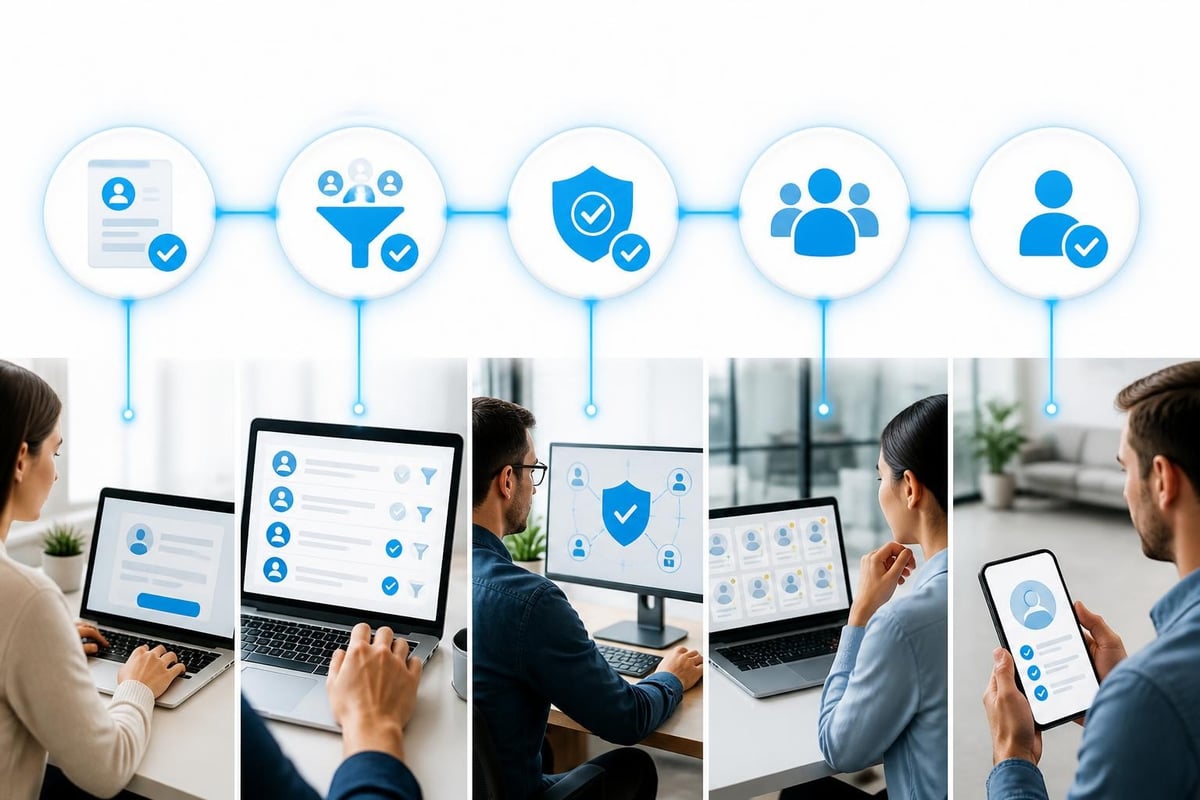
The infrastructure advantage becomes clear at scale. When you onboard three models monthly, manual tracking suffices. At ten to fifteen monthly signings, missing a follow-up or losing application data costs real revenue. Portal leads create an audit trail, ensure no prospect falls through cracks, and provide metrics on conversion rates by source, timeframe, or recruiter.
Building Your Lead Capture System
A functional portal lead system requires three layers: capture interface, qualification logic, and routing mechanism. Start with the capture interface-a dedicated landing page or embedded form that collects essential information without overwhelming applicants.
Essential Data Points to Collect
Your portal should capture enough detail to qualify leads without creating friction. Over-asking kills conversion; under-asking wastes team time. Balance looks like this:
- Full legal name and date of birth (compliance starts here)
- Contact details (email, phone, preferred platform)
- Current platform presence (Instagram, TikTok, existing OFM accounts)
- Monthly earnings or follower count (qualification threshold)
- Content niche and comfort boundaries (fit assessment)
- Preferred management model (percentage split, flat fee, hybrid)
Each field serves a purpose. Legal name and birthdate enable immediate age verification before investing outreach effort. Platform presence and earnings data let you tier leads-A-tier prospects with existing monetization get priority contact within hours, while B-tier applicants enter a nurture sequence.
Automated Qualification Filters
Not every inquiry deserves immediate human attention. Automated filters save hours weekly by flagging disqualified leads before they reach your team. Common filters include age gates (automatically reject under-18 submissions), geography restrictions (if you only manage US or UK talent), and earnings thresholds.
The purpose of a leads portal extends beyond capture-it pre-qualifies at scale. If your minimum viable creator already earns $2,000 monthly or has 50,000 Instagram followers, configure your portal to route anyone below that benchmark into a waitlist or educational drip campaign rather than immediate outreach.
| Filter Type | Threshold Example | Action |
|---|---|---|
| Age verification | Under 18 years | Auto-reject with explanation |
| Earnings floor | Below $1,500/month | Route to nurture sequence |
| Geography | Outside US/UK/CA | Tag for future expansion list |
| Platform presence | No social media | Request portfolio review |
This table structure prevents wasted recruiter hours on unqualified prospects while maintaining a professional experience for everyone who applies.
Routing Portal Leads to Your Team
Once a lead passes initial filters, routing logic determines speed-to-contact. In creator agencies, speed wins-prospects often apply to multiple agencies simultaneously, and whoever responds professionally within two hours typically closes the deal.
Assign leads based on team capacity, specialization, or round-robin rotation. If you have recruiters who specialize in fitness creators versus lifestyle influencers, route based on the niche field captured in your portal. If your team is generalist, implement round-robin to balance workload and prevent bottlenecks.
Notification Systems That Work
Your team needs instant alerts when qualified leads arrive. Email notifications get buried; SMS or Slack pings generate immediate action. Configure your portal to send instant notifications to the assigned recruiter with a summary of key details-name, platform stats, and earnings-so they can personalize outreach without opening a dashboard.
A staff dashboard with quick-view lead information eliminates context-switching. When a notification arrives, your recruiter should see the full application, any notes from automated scoring, and next-step recommendations on a single screen. This reduces response time from thirty minutes to under five.
The lead funnel for creator agencies differs from traditional sales pipelines. You're not just qualifying budget and need-you're assessing content quality, personality fit, and long-term revenue potential. Portal leads that include video introductions or portfolio links convert 40% better than text-only submissions because they accelerate the evaluation phase.

Converting Portal Leads Into Signed Creators
Qualification and routing mean nothing without conversion. Your portal lead becomes a creator when they sign a management contract and complete compliance documentation. The gap between "interested applicant" and "onboarded talent" is where most agencies lose momentum.
First Contact Best Practices
Your initial outreach sets the tone. Personalize using details from their application-reference their specific platform, acknowledge their current earnings, and outline what growth looks like with your support. Generic templates kill trust before you build it.
Within your first message, establish next steps clearly. "I'd like to schedule a 20-minute call to discuss your goals and explain how we support creators at your stage" works better than "Let me know if you're interested." Specificity builds confidence, and prospects who submitted portal leads already indicated interest-now you demonstrate value.
Book meetings directly through calendar links embedded in your response. Friction kills conversion, and asking prospects to suggest times creates unnecessary back-and-forth. Automated booking, confirmed via SMS, reduces no-show rates and accelerates your pipeline.
Compliance and Onboarding Through Portal Workflows
Once a creator verbally commits, compliance and contract execution determine how quickly they become revenue-generating. Portal leads should flow directly into your onboarding process without manual data re-entry.
Modern systems pull application data into contract templates automatically. Legal name, birthdate, address, and payment details populate your management agreement, eliminating transcription errors and reducing contract generation from thirty minutes to under three.
Document Collection and Verification
Compliance requires identity verification, age documentation, and signed agreements. Your portal workflow should request these documents sequentially-don't overwhelm new creators with ten upload requests simultaneously. Sequence looks like this:
- Government-issued ID upload (immediate age verification)
- Proof of address (if required by payment processor)
- Tax documentation (W-9 for US creators, equivalent international forms)
- Signed management contract (digital signature via portal)
- Banking details for payouts (secure encrypted collection)
Each step confirms receipt and moves the creator to the next stage automatically. A creator who completes all five steps within 48 hours indicates high commitment; one who stalls at step two may need additional support or isn't truly ready.
BIGROS handles this entire sequence on one screen, allowing you to track where each model sits in compliance without spreadsheet juggling or manual follow-ups. The platform's compliance portal ensures you never onboard a creator without complete documentation, protecting your agency from legal and financial risk.
Tracking Portal Lead Performance
What you measure improves. Track conversion rates by lead source, time-to-response, and recruiter performance to identify bottlenecks and opportunities.
| Metric | Target Benchmark | Why It Matters |
|---|---|---|
| Portal-to-qualified rate | 60-70% | Filters working correctly |
| Qualified-to-contact rate | 95%+ | No leads falling through cracks |
| Contact-to-meeting rate | 40-50% | Outreach quality and speed |
| Meeting-to-signed rate | 50-60% | Value proposition and process clarity |
| Signed-to-live rate | 85%+ | Onboarding efficiency |
These benchmarks reflect mature creator agency operations. If your portal-to-qualified rate sits below 50%, your filters are either too strict (rejecting viable talent) or too loose (wasting team time). If contact-to-meeting drops below 30%, your outreach templates need work or your response speed lags competitors.
Run weekly pipeline reviews with your recruitment team. Discuss which portal leads converted quickly and why, which stalled and at what stage, and what patterns emerge. A recruiter who consistently converts 65% of meetings into signed contracts likely has process insights worth documenting and training across your team.
Lead Source Attribution
Not all portal leads carry equal value. Traffic from TikTok may convert differently than Instagram referrals or paid ads. Tag each submission with source data-UTM parameters for digital traffic, referral codes for creator recommendations-and analyze ROI by channel quarterly.
If you discover that creators who found your portal through existing talent referrals convert at 75% while cold paid traffic converts at 35%, reallocate marketing budget toward creator referral incentives. Your lead models should evolve based on actual performance data, not assumptions about which channels "should" work.
Scaling Your Portal Lead System Past Twenty Models
Systems that work for five creators break at fifteen and catastrophically fail at thirty. Design for scale from the beginning, even if current volume doesn't demand it. The infrastructure that supports twenty portal leads monthly handles sixty without modification.
Multi-Tier Routing for Larger Teams
As you add recruiters and account managers, implement multi-tier routing. Tier-one recruiters handle initial contact and qualification calls. Tier-two account managers take over after contracts are signed, managing onboarding and content planning. Portal leads should automatically re-assign at each stage transition.
This specialization prevents recruiters from getting bogged down in onboarding logistics while allowing account managers to focus on creator success rather than prospecting. Clear handoff protocols-documented in your portal workflow-ensure nothing gets lost when a lead moves from recruitment to management.
Integration With Revenue and Payroll Systems
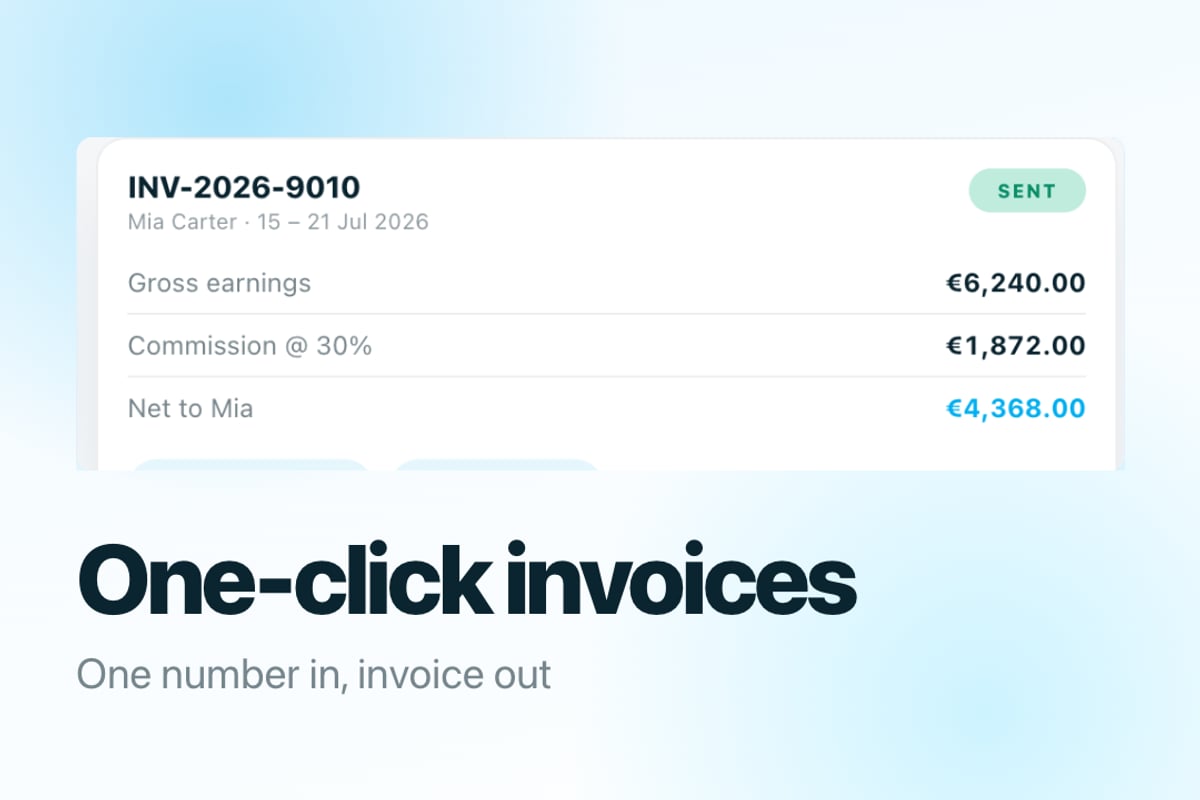
Portal leads eventually become creators generating revenue that requires invoicing, payment distribution, and profit tracking. Your lead system should connect directly to invoicing and payroll capabilities, eliminating manual data transfer between platforms.
When a creator goes live and generates their first $5,000 month, your system should automatically calculate your agency commission, generate an invoice, track payment status, and schedule creator payout-all triggered from the same profile created when they submitted their portal lead. This closed-loop approach prevents the revenue leakage that plagues agencies using disconnected tools.
Common Portal Lead Challenges and Solutions
Even well-designed systems face recurring issues. Here's how to address the most common ones:
Challenge: Low application quality despite high volume. Your portal attracts quantity but not qualified prospects. Solution: Add a short video introduction requirement or increase the detail requested in niche and experience fields. This friction filters casual browsers while serious applicants invest the effort.
Challenge: Leads go cold between initial contact and contract signing. Momentum dies in the gap between interest and commitment. Solution: Compress your timeline. If you currently take seven days from first call to signed contract, target three. Use automated contract generation and digital signature workflows to eliminate delays.
Challenge: Team members don't follow up consistently. Manual processes rely on individual discipline, which fails under pressure. Solution: Automate follow-up sequences. If a qualified lead doesn't respond to initial outreach within 24 hours, trigger an automatic second touchpoint via different channel (email then SMS, for example).
Frequently Asked Questions
How many portal leads should we generate monthly to sustain growth? Aim for 3-4x your target monthly signings. If you want to onboard ten new creators monthly and your qualified-to-signed conversion rate runs 40%, you need twenty-five qualified portal leads, which typically requires forty to fifty total submissions after filters.
Should we use a custom-built portal or third-party platform? For most agencies, white-label software or purpose-built creator agency tools deliver faster ROI than custom development. Custom portals make sense above 100 active creators or with highly specialized workflows that commercial platforms can't accommodate.
How do we prevent portal lead data from being misused or leaked? Implement role-based access controls so recruiters see only leads assigned to them, encrypt all data at rest and in transit, and maintain detailed audit logs of who accessed which records when. Privacy and data protection matter both legally and reputationally in this industry.
Portal leads provide the systematic foundation that creator agencies need to scale beyond ad-hoc recruiting. Capture, qualification, routing, and conversion processes that work at ten models continue working at fifty when you build with intention from day one. BIGROS gives you the complete operating system to manage portal leads, onboard creators, handle compliance, and track profitability-all on one screen built specifically for OFM agencies.